 The Market Monitor Minding the Nation's Business
By Rose de la Cruz
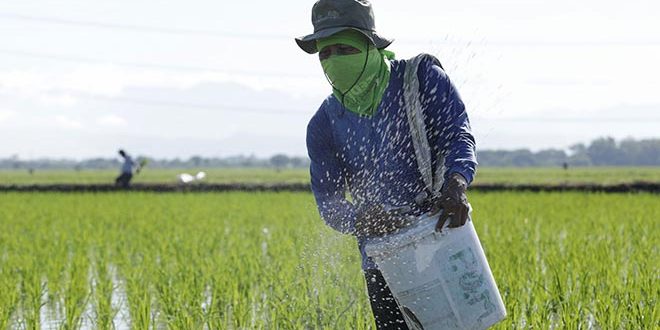
Instead of relying on the certified seeds that provincial and agricultural field offices would supply them, more farmers are now growing their own certified seeds, which they sell to their peers in their own and even neighboring towns. This development ensures that farmers are able to plant on time, or even earlier depending on availability of water, and not wait for the next delivery of seeds and other inputs.
Seed growers in Isabela, Quezon and other Luzon provinces have been producing more certified seeds enough to satisfy the requirements of their peers in their own barangays and town but also for other nearby provinces.
Farmers in Buenavista, Quezon have increased their productivity by locally producing the seeds of Mestiso 20 or M20 introduced by the Department of Agriculture-Regional Field Office (DA-RFO) in 2022 and have proven to be resilient to diseases and drought.
The Philippine Rice Research Institute announced that in Burgos, Isabela seeds growers have been supplying their certified seeds to the municipality through the help of the Rice Competitiveness Enhancement (RCEF) Seed Program.
One of the seed producers, Alex Simbajon, received training from DA-RFO and started growing M20 seeds in his 1.5 ha. He sold his seeds to other farmers in the area, including Marites Mendoza, who achieved a 7.1t/ha in the 2023 dry season. Mendoza praised the quality and performance of the seeds, saying they were comparable to those from DA-RFO.
A year after participating in a hybrid rice seed production training, Simbajon established his hybrid rice seed production in Buenavista, marking the first Mestiso 20 (M20) hybrid rice seed production in Luzon.
Simbajon now serves as the primary source of M20 seeds for all local farmers, employing 30 workers to help him with the production. He hopes that more seed growers will venture into hybrid rice seed production, which will create more employment opportunities and boost the local economy.
Simbajon’s decision to engage in hybrid rice seed production was influenced by Alvin Ray Rivera, a fellow farmer and current vice mayor of Buenavista. They have been cultivating hybrid rice seeds for years and have seen the benefits of M20, which exhibited strong crop growth and produced a remarkable yield of 8t/ha.
OIC Municipal Agriculturist Fenora G. Martinez, of Burgos, Isablea said that unlike before, the town no longer worries about farmers’ access to certified inbred seeds, which studies show can increase yield by 10% or more. Certified seeds are relatively pure, have fewer weed seeds, free from visible seed-borne diseases, full and uniform in size, and have at least 85% germination rate.
In Burgos, all of the rice farmers plant inbred rice during the wet season while 90% during the dry season. The 32 seed growers who cultivate 904ha also supply the neighboring towns.
Gallardo C. Reglos, one of the seed growers, shares that he plants NSIC Rc 222, Rc 436, Rc 508, and Rc 512 in his 15ha as these are high-yielding and farmers’ preferred varieties.
“I’m grateful for the RCEF Program as I’m able to harvest 5-6t/ha through the program’s knowledge and support,” he said.
Despite challenges such as rat infestation and technical difficulties, Simbajon and Rivera persevered in hybrid rice seed production. Their efforts were rewarded when hybrid rice seeds from the 2022 wet season’s training were sold to DA-RFO and distributed to local farmers.
Another seed producer, Rodel Rivera, shared Simbajon’s vision of expanding hybrid rice seed production in the municipality. He said that M20 is easy to take care of and suitable for the Quezon climate. He also hopes that the government will support their initiative and help them find more buyers for their seeds.
The farmers also appreciate the accessibility and availability of the seeds, which gives them more confidence in planning their planting. They said that before, they had no assurance that hybrid rice seeds were available, but now, they can rely on Simbajon and fellow seed growers for their needs.
The hybrid rice seed production in Buenavista is a result of the collaboration between DA-RFO, the local government, and the farmers. (With reports from PhilRice’s Christine Reyes, Meshelle Domingo)