 The Market Monitor Minding the Nation's Business
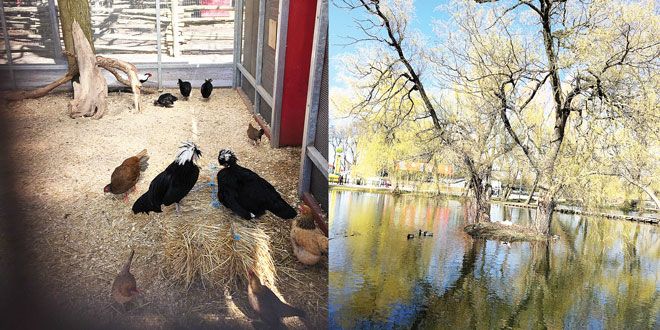
 I had squealed childlike at a cock’s midday crow— fortunately, a friend and I had sauntered to a rather isolated bend in Centre Island along the banks of Lake Ontario from across Toronto’s skyline, or else, recognizing an elderly Filipina that I am, selfie-driven millennials, who crowded scenic nooks like a willow-draped bridge, would have smirked, understandably, at my inappropriate, hence, ridiculous display of joy; if of their age, I would have.
Scanning droves of us, who had ferried from the city for a thrill of romping on the meadow, watching out for a blue jay’s flash of electric blue, or picnicking on the grass— quite a few did bring food boxes we’d later see spread on the knoll—and yet, more like us, simply drawn to the “farm” farther up the path, where we had meandered, would meet the rooster and his “harem” of fat hens; they’re “housed” in coops that sheer chicken wire fenced in.
With toddlers, shrieking, yes, like I did, at first sight of live peeps with their “moms and dads”, how blissful it had felt to relive childhood, no matter the cost, the ferry crossing, for one.
Just looking, or visiting them “in prison”—there’s a peacock, too, in the next cage, and a turkey, huge enough to feed a family of thirteen next Thanksgiving Day, which four ducks of unrelated sizes and color, waddled to chat with, clucking what the children and I, squeamishly attempted to interpret—has not been of late, uncommon, here in North America, for families who have long been uprooted from farms.
That we could get that close to the coops for free, and the pond teeming with ducks and a few swans, right across, isn’t usual—what is, would be paid-experience for such moments like a few minutes of ogling at chickens or holding one, if it comes with the package; and where, not only would parents in some cities drive their children to heritage farms and pay to enter, or rent a coop, now one of the growing service businesses, until the hens lay eggs, picking each, still warm every morning, being the valued experience.
While some farm parks offer hands-on milking of cows, and a short canter with a horse, none allow younger children to belly-rub piglets, limiting experiences with just watching them feed from troughs. Even more highly prized would be to find postcard grazing sheep in yet another farm park, like in Comox, British Columbia, or a full-farm visit in Agassiz, also in BC, where a nanny and her kid, would pose with you, as if you were family, or if able, fly to Tuscany, where shepherds tend flock to this day.
All these would have sounded incredulous for Inay, my grandmother, say, to pay a handler for my sister to hold a piek (kiti)—clumps of them used to roam in our backyard, wandering about like dandelion fluff, inviting a child’s tendency to grab any cuddly thing, which she did; disbelieving warnings from my grandaunt, Nana Iniang, who owned the brood, not to drive chicks to frenzy or else an overprotective upa (inahin)— like one of ours I named, Bessie, would retaliate—my sister, who not only caught chicks but also put them under a coconut shell to revive them from stupor, as she had claimed, came home, one day, with a nicked eyelid, slightly trembling from mild terror.
As for a chance to belly rub a pig’s belly, like Mona’s, who I met in Munoz, Nueva Ecija, via her owner, Tessie, in an interview about an ethanol-free-waste experiment at her farm house, would be a highly-prized experience, especially if set up like a performance. Timing would be essential, like after-school, when Tessie prepared Mona’s supper: Act One, would have the “audience” sit under a balimbing tree, against which Mona with gentle grunts rubbed her back, shaking the tree for the ripe fruits to fall into a puddle, into which Mona then plunged, snapping at them like appetizers. Act Two, would be the thrill of watching her slurp gruel from the trough, and then, lie on her back, inviting a belly-rub.
Think how much farm parks in North America would charge for such daily experience—with less to offer, parents hardly wince at the cost. Consider these: In a short video on feeding piglets though at a distance from the pen, little girls shrieked and giggled entertained at the sight, while at another farm, children merely learned how to draw animal faces and name them. Indeed, valuable beginnings to integrate nature into their lives, nonetheless, instead of seeing birds and animals as simply part of the surroundings, and perhaps, develop empathy, as I had learned in a workshop.
Just now, I believe I had gained unaware and for free such treasure—days in my teens with an elderly aunt, Nana Senang, a shepherdess, whose flock climbed up to the living room she has long cleared, not herded at night into a pen in the yard, lambing, as well, in one of the bedrooms, have since transfigured as mythical images in some of my poems.