 The Market Monitor Minding the Nation's Business
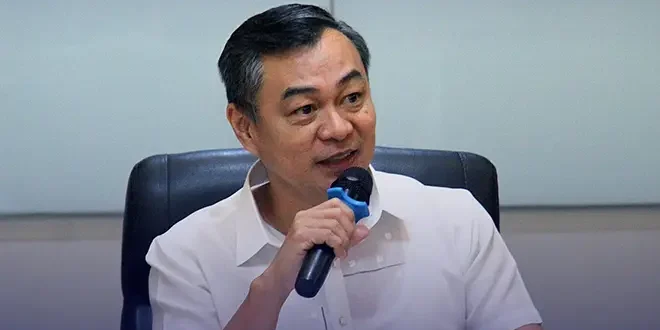
National Food Authority (NFA) Administrator Larry Lacson has thrown his support behind proposed amendments to the Rice Tariffication Law (RTL), saying the changes are crucial to protecting farmers, consumers, and the broader rice industry.
Speaking on Friday during the groundbreaking ceremony for a modernized NFA warehouse, Lacson said the agency is pushing for the restoration of its market intervention powers, which were removed when the RTL took effect in 2019.
“We know that we cannot sell to the market, to the grains’ retailers. P20 (Benteng Bigas, Meron Na! program) and emergencies, calamities only. What effect will that have on us? If we are given a market intervention where we are able to dispose regularly, our stocks will no longer age. So, it will always be fresh, it will always be good,” Lacson said.
He stressed that the law stripped the NFA of critical regulatory authority, including its ability to directly sell rice to the public and help stabilize prices and supply.
“For now, who is regulating the retailers, the traders? Who has a list? None. Bodega (warehouse) Who knows that? None. We don’t know if they are really hoarding. So, it should be reversed, just like before, so that at least we know who are the players in the industry. And at the same time, we can talk to them because we know them. Now, we don’t know them. They have their own market trade,” he said.
In December 2024, President Ferdinand R. Marcos Jr. signed into law a measure amending the RTL as part of the government’s push to stabilize food supply and bring down rice prices.
The RTL, or Republic Act No. 11203, liberalized rice imports by replacing quantitative restrictions with tariffs and created the Rice Competitiveness Enhancement Fund to assist farmers through mechanization, improved seeds, credit, and training.
The law, however, has faced criticism for depressing farmgate palay prices and weakening the NFA’s regulatory role, fueling renewed calls for further amendments.
Lacson said restoring the agency’s powers would help bring stability to the rice sector and deliver benefits to both farmers and consumers.
He added that proposed amendments are now being discussed by working groups in both the House of Representatives and the Senate.
“I think there is a broad consensus that this will be brought back to us. Actually, there are a lot of bills filed in Congress with regards to this,” he said.
Meanwhile, Lacson assured the public that the NFA has enough buffer stock to cover up to 11 days, with 2.7 million bags of milled rice currently in storage.
“And we will still be able to buy. We will still be able to buy. So, there is nothing to worry about. We are ready if there is a calamity. Our stocks are in position,” he said.