 The Market Monitor Minding the Nation's Business
By Rose de la Cruz
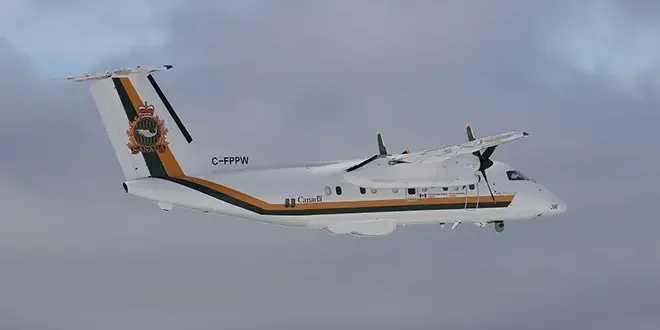
A two-week joint aerial patrol of the Philippines’ Bureau of Fisheries and Aquatic Resources and Canada’s Fisheries and Oceans Dash 8 surveillance aircraft was able to monitor at least 88 illegal fishermen on the eastern coast of the Philippines up to the high seas near Palau.
The use of a Canadian air asset to find operators of illegal, unreported and unregulated (IUU fishing in Philippine waters sped up and expanded detection of violators for BFAR, Rappler reported BFAR last December 2.
Roy Ortega, OIC of the Fisheries Resources Management Division at BFAR, described the two-week (70 hours) joint aerial patrol using DFO Dash-8 surveillance aircraft an “eye-opener” on what’s happening out at sea.
“Before, we were focused only on deploying surface assets and can only cover much and it’s very loose out in the sea,” Ortega told the media.
“With this air asset, we were able to cover a vast expanse of maritime areas in [a] short span of time.”
IUU fishing is a global problem that concerns food, livelihood, and maritime security. It is linked to labor violations, overfishing, and exploitation of the environment, Rappler added.
Many commercial fishing operators get away with IUU by switching off their transponders– devices that help track vessels’ position and movement. They are often referred to as “dark vessels.”
The UN Food and Agriculture Organization estimates financial losses due to IUU fishing at $23 billion.
Tracking fishing vessels at sea is a worldwide practice called the Vessel Monitoring System (VMS) and the Philippine Fisheries Code requires commercial fishing vessels to comply with this system, Rappler noted..
The mission is part of Canada’s Dark Vessel Detection project.
The Dash-8 aircraft has several consoles which officers use to monitor fishing vessels’ location, time, and speed. Ortega said seven BFAR officers joined Canadian flyers for Operation Bantay Lawud (which translates to ‘Sea Guardian’).
From Cebu, they flew over waters in Batanes and reached up to Mati-Matihan, the high seas adjacent to the Philippines’ exclusive economic zone, Rappler added.
“From our statistics, there are more or less 600 commercial fishing boats registered in the Visayas and so far 34 were violators as they were not supposed to be there,” Rappler quoted Ortega.
Using the inverse synthetic-aperture radar, the surveillance team can generate a two-dimensional image of the target vessel.
“We can see the profile of the vessel, so we can tell if it’s large [or] small,” John Boyce, sensor operations manager at PAL Aerospace, told reporters inside the aircraft.
“We can tell what type of vessel it is. We see a vessel that’s not broadcasting its navigational information. We call it a dark target, and that’s a target of interest to us,” Boyce further explained.
The mission concluded on Sunday, December 1.
Sean Wheeler, an officer of DFO, said the reason why they are monitoring western Pacific is because there are few traditional enforcement assets available and “we’re working really closely with BFAR to get more surveillance assets out there to understand the fishery more, understand the levels of IUU, and effectively to – in the end – deter IUU fishing from happening,” he added.
Detecting IUU in the Philippines’ exclusive economic zone, as well as the western Pacific, is of “primordial importance” to Canada’s Indo-Pacific strategy, said Canadian Ambassador to the Philippines David Hartman.
Hartman said these activities could “generate a greater sense of awareness of the breadth and scope of activities taking place” in Philippine waters and adjacent high seas.
Dubbed “Operation Bantay Lawud (Sea Guardian),” the joint fisheries initiatives of both countries aim to combat illegal, unregulated and unreported (IUU) fishing.
Sean Wheeler, chief of the international enforcement of the Conservation and Protection of DFO, said they decided to launch this joint undertaking in the eastern seaboard of the Philippines as both countries are members of the High Seas Commission.