 The Market Monitor Minding the Nation's Business
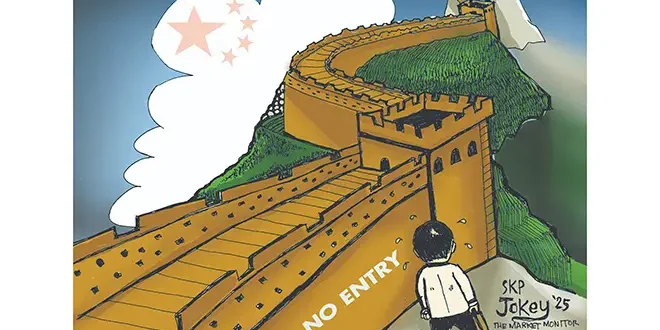
China’s decision to bar former Philippine senator and current Deputy Majority Leader Francis Tolentino from entering all its territories is both revealing and troubling.
This move—reportedly in retaliation for his firm stance on Philippine sovereignty in the West Philippine Sea—exposes Beijing’s growing intolerance for lawful, diplomatic dissent.
Tolentino has been among the most vocal defenders of Philippine maritime rights. He has consistently cited the 2016 arbitral ruling that invalidated China’s sweeping claims over the South China Sea and reaffirmed the Philippines’ exclusive sovereign rights within its own Exclusive Economic Zone.
For this, he is punished—not through dialogue or engagement—but by blacklisting, a tactic more befitting an authoritarian regime than a global power seeking legitimacy.
This act does not weaken Tolentino’s advocacy; it strengthens it. It sends a clear message that the Philippines’ assertiveness—no matter how peaceful, reasoned, or principled—is hitting a nerve in Beijing.
If merely standing for what is right and legal earns a travel ban from China, then it is not Tolentino’s credibility that suffers, but China’s.
It also raises a deeper concern: What does this say about the value China places on diplomacy, mutual respect, and freedom of expression?
The use of bans and bullying to silence critics is the mark of a nation that fears open discourse, especially when it involves the rule of international law.
The Chinese ban, rather than silencing a critic, only fuels the urgency for Filipinos to close ranks around truth, sovereignty, and the need to uphold international norms.
In the court of global opinion, such heavy-handed tactics wave a red flag—and the world is watching.