 The Market Monitor Minding the Nation's Business
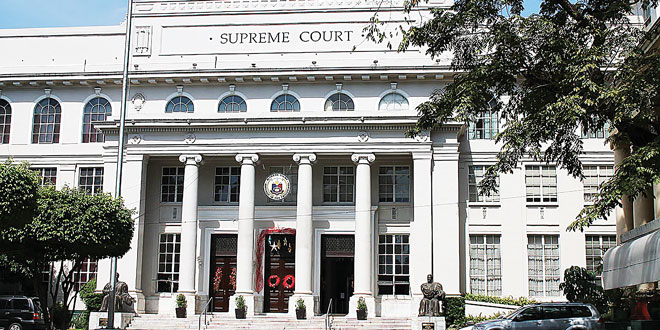
The Philippine Supreme Court recently ruled that the President of the Philippines can unilaterally withdraw from international agreements that he or she considers contrary to the 1987 Constitution or existing laws.
The High Court added however that the Philippines is still obligated to cooperate with the International Criminal Court (ICC) despite its withdrawal from the Rome Statute.
The ICC can prosecute “government actors” for alleged crimes committed before the country withdrew from the tribunal—negating President Rodrigo Duterte’s claim it has no jurisdiction, according to the Supreme Court.
The Supreme Court dismissed the petitions challenging Duterte’s decision to withdraw the country’s membership in the ICC, which is expected to conduct a full-blown investigation into his deadly drug war.
In a unanimous decision penned by Associate Justice Marvic Leonen, the SC “dismissed the petitions questioning the unilateral withdrawal for being moot and academic.”
The Rome Statute is the treaty that established the ICC, the only permanent international court with jurisdiction to prosecute individuals for international crimes of genocide, crimes against humanity, war crimes, and crime of aggression.
“The abrogation of treaties that are inconsistent with the Constitution and statutes is in keeping with the president’s duty to uphold the Constitution and our laws,” the Supreme Court ruled on March 16, with the decision released just last July 21.
“Thus, even sans a judicial determination that a treaty is unconstitutional, the president also enjoys much leeway in withdrawing from an agreement which, in his or her judgment, runs afoul of prior existing law or the Constitution,” the court added.
However, the SC also cited the Rome Statute’s provision that the exit does not affect criminal proceedings pertaining to acts that occurred when a country was still a state party.
Duterte has repeatedly said the Rome Statute is not enforceable in the Philippines as it was not published in the Official Gazette or a newspaper of general circulation, citing jurisprudence.
The SC said the President could not unilaterally withdraw from agreements that were entered into “pursuant to congressional imprimatur,” or where the Senate concurred and expressly declared that any withdrawal must also be made with its concurrence.
Earlier, former ICC prosecutor Fatou Bensouda said the Court retains jurisdiction over alleged crimes against humanity that have occurred on Philippine territory during the period when it was a state party from November 1, 2011 to March 16, 2019.
Malacañang has repeatedly said President Rodrigo Duterte and the government will not cooperate in any ICC investigation, claiming lack of jurisdiction. The Palace also said the request for an investigation was “legally erroneous and politically motivated.”
“The decision noted that in this case, there were provisions in a prior law, Republic Act No. 9851, which were amended by the Rome Statute,” the SC added.
RA 9851 refers to domestic law otherwise known as the “Philippine Act on Crimes Against International Humanitarian Law, Genocide, and Other Crimes Against Humanity”, which penalizes crimes against international humanitarian law, genocide, and other crimes against humanity. It was enacted into law in December 2009.
In a diplomatic note to the United Nations Secretary General, the Philippines said that “the decision to withdraw is the Philippines’ principled stand against those who politicize and weaponize human rights, even as its independent and well-functioning organs and agencies continue to exercise jurisdiction over complaints, issues, problems and concerns arising from its efforts to protect the people.” Six senators said the President’s withdrawal from the ICC is invalid as it has no concurrence from at least two-thirds of the 24-member Senate.