 The Market Monitor Minding the Nation's Business
By Rose de la Cruz
San Miguel Corp- led New NAIA Infra Corp (NNIC), which takes over the country’s main gateway on Sept. 14, has assured the public that airport operations will remain uninterrupted during the transition.
Future changes and improvements, including terminal reassignments, will be carried out gradually and strategically and would be done in close coordination with airline stakeholders, particularly on the reassignment of terminals.
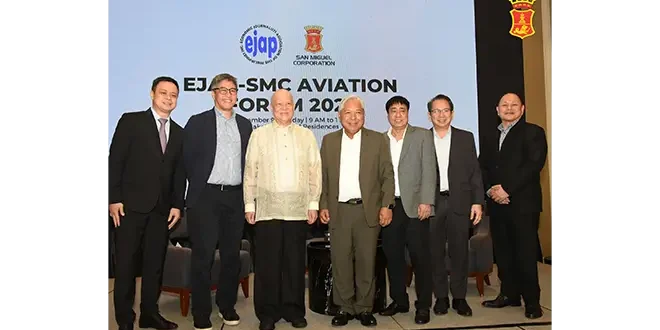
At the Tuesday Aviation Forum hosted by the Economic Journalists Association of the Philippines (EJAP), NNIC general manager Angelito Alvarez highlighted that terminal reassignments will be executed as a carefully planned, phased process, rather than a sudden overhaul, Bilyonaryo reported.
These modifications are part of a larger initiative to modernize the airport and enhance the passenger experience.
Alvarez also assured that travelers at NAIA can anticipate a smooth transition with minimal disruptions, as NNIC will prioritize gradual improvements and phased terminal changes.
Already budget carriers– AirAsia Philippines and Cebu Pacific– urged a thorough consultation and meticulous planning of the airport by NNIC in its planned terminal reassignments.
While expressing support for the long-term vision of NNIC, the two carriers emphasized the need for detailed coordination to minimize passenger disruptions during the transition, Business Mirror reported.
Alvarez said at Tuesday’s Aviation Forum hosted by EJAP and SMC that the company has engaged “several consultants” to optimize the utilization of Naia’s four terminals.
Initially, the proposal is to make Terminal 2 a purely domestic facility, while Terminal 1 will be for the exclusive use of Philippine Airlines (PAL). All foreign airlines, including some operations of Cebu Pacific and AirAsia, will be moved to Terminal 3. It also includes the proposal to transfer AirAsia back to the smaller Terminal 4.
“It will happen only in three years once the Terminal 2 extension (on the site of the abandoned Philippine Village Hotel) is completed,” he noted.
“Such terminal reassignment requires careful planning, including time and motion studies, consideration of environmental factors, and adequate time for implementation to minimize disruptions, especially as we are also nearing the peak season,” AirAsia said.
It added: “In fully supporting NNIC’s great plans for Naia, we trust that optimizing airport utilization will benefit everyone involved, especially our passengers who deserve the best experience possible.”
Cebu Pacific echoed this point stressing the importance of extensive consultations and preparation.
“To ensure a seamless transition with minimal disruption to passengers, a thorough consultative process and sufficient preparation time are essential for every terminal transfer,” Business Mirror quoted the Gokongwei-owned carrier.
Citing its experience at Singapore’s Changi Airport, where discussions for terminal reassignment took a year, Cebu Pacific highlighted the importance of comprehensive planning to ensure minimal disruptions for passengers.
“If sufficient time and consultation are given, terminal transfers can be handled smoothly. With proper planning and open communication, airlines can successfully manage these transitions,” the airline noted.