 The Market Monitor Minding the Nation's Business
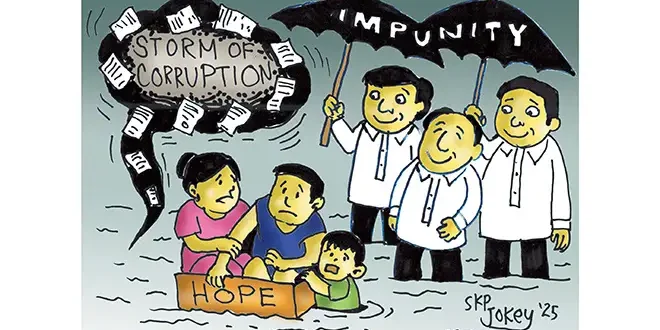
The traditional exodus of Filipinos during All Saints’ and All Souls’ Days — a time for reflection, reunion and remembrance — was abruptly interrupted this year by the wrath of two powerful typhoons that battered large parts of the country. The nation, still counting the dead and displaced, once again found itself in a familiar cycle: calamity, sympathy, and a scramble for response.
The twin storms not only devastated communities but also conveniently swept away public attention from the slow grind of justice involving corrupt officials and their wealthy benefactors.
In the aftermath, the headlines shifted from corruption cases to casualty counts. Yet in courtrooms far removed from floodwaters and fallen trees, the machinery of delay churned on. The newly lawyer of former Congressman Rizaldy Co offered a chilling preview of how the powerful insulate themselves from both legal and public accountability. He brazenly dismissed the long-standing legal norm that “flight shows guilt,” resorting instead to the well-worn tactics of invoking threats to life and claiming a lack of direct evidence. Even the ownership of helicopters and a private jet — reportedly flown out of the country — was denied for want of explicit documents.
Such defenses insult public intelligence. Ordinary citizens know that justice in the Philippines moves not at the pace of truth, but at the pace of privilege. For every community struggling to rebuild after a typhoon, there is a politician or contractor rebuilding his defense against corruption charges — both relying on public money, but with vastly different ends.
Meanwhile, the country reels from overlapping disasters. The task of rebuilding after the recent typhoons now coincides with ongoing recovery efforts from the earlier earthquake in northern Cebu. The storms are growing stronger, the quakes more frequent. The only catastrophe left to complete the grim trifecta is the long-dreaded “Big One” expected to strike Metro Manila. Disaster drills and warehouses full of sardines and rice will not prevent nature’s fury. What can mitigate the damage, however, is genuine leadership — disaster management anchored in transparency, coordination, and foresight, not in opportunism and photo opportunities.
Crises, as always, bring out both the best and the worst in Filipinos. Local government units are often quick to declare a “state of calamity,” opening the floodgates for the release of funds — but not necessarily for the release of actual help. Calamity loans become endurance tests, and relief goods are filtered through layers of bureaucracy. Too often, only those who can pay bribes for barangay certifications or who have personal connections receive assistance.
The private sector, for its part, mobilizes swiftly — but often only under the glare of television cameras. Once media coverage fades, so does the urgency. What remains is a nation of survivors left to their own devices, while officials give press conferences about “resilience.”
When the Big One finally strikes Metro Manila, who will come to its aid? The system, already fragile, will likely collapse under the weight of its own dysfunction. Provinces that have long suffered from inequitable aid distribution may hesitate to help, remembering how assistance was withheld or siphoned off during their own moments of need.
It is a bleak forecast, but one that need not be inevitable. The storms and earthquakes will not stop, but corruption, negligence, and greed are human-made disasters we can control. The call, therefore, is not only for regional directors, contractors, and lawmakers to contribute to rehabilitation, but for them to be held accountable — not after the next disaster, but before it.
Because if there is one thing more devastating than nature’s fury, it is a nation numbed to injustice, waiting for rescue that will never come.