 The Market Monitor Minding the Nation's Business
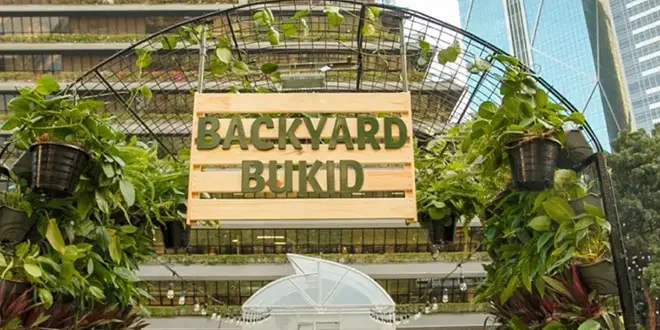
Foundations of business conglomerates like San Miguel Corp., Meralco and SM Corp. are competing with each other in popularizing urban farming, which makes a lot of sense in growing further their businesses while satisfying their employees’ needs for accessible food supply.
It is not known which one did it first, but which one of them has embraced urban farming as a way of life, rather than a tax dodge or for publicity mileage.
Some have gone into training programs for farmers– both rural and urban while others gave most focus on urban farming, as it is in urban areas where food scarcity often hits, especially during typhoons and landslides when upland veggies can’t be brought to urban markets.
Urban farming became a popular hobby during the pandemic, when people were locked up in their homes, could not buy food supply in wet markets and groceries as often as pre-pandemic times and because they had all the time in the world, people had to look for something more gratifying than watching Netflix in their homes.
The objective of urban farming is to train their employees to grow their own crops or the farm-to-table approach, so that they would not lack for anything, come hell or high water.
San Miguel Corp., a highly-diversified company that began as a food business, plans to expand yearly its urban farming program to three sites.
The program started at its main office in Mandaluyong and is now in six sites across the country.
Through its San Miguel Foundation, SMC said its Backyard Bukid project would boost its effort to achieve food security and support livelihoods in low-income communities.
Aside from its Backyard Bukid project in the head office in Mandaluyong, the other sites– now totaling 3,300 square meters– are in Cavite, Tondo in Manila, Pili in Camarines Sur; Hagonoy in Bulacan, Davao del Sur and Impasug-ong in Bukidnon.
The foundation explained that the project began as its way of helping the utility, maintenance and security staff to grow their own food and earn additional income during the Covid pandemic.
Now, the initial 750 sq.m. spans to 3,300 sq.m. involving over 120 active volunteers from SMC workers, third party personnel and residents of surrounding barangays.
As SMC chair/CEO Ramon S. Ang said: “We wanted to provide more than just livelihood. We wanted to give our people a sense of purpose and ownership. That small patch of land gave us proof that the model could grow.”
Participants of the urban farming project undergo a three-month intensive training program provided by SEED Philippines.
The training covers organic farming methods including composting, seedling production, natural pest control and biopesticide formulation. Rose de la Cruz