 The Market Monitor Minding the Nation's Business
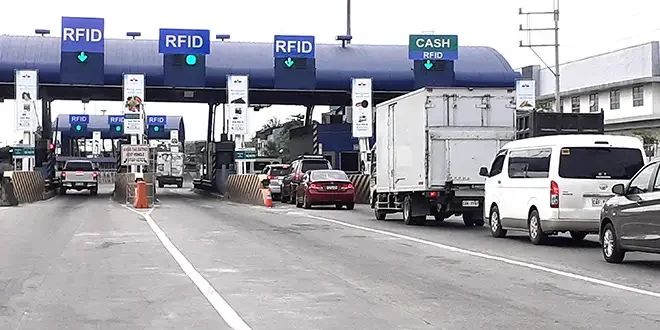
The Toll Regulatory Board (TRB) hopes that full cashless toll collection and interoperability among expressway operators can be implemented within the year, despite existing challenges in account management and system reliability.
TRB Executive Director Alvin Carullo said that while the original plan for full cashless implementation has been suspended for further review, the board is actively working on resolving key issues, particularly in the toll operators’ account management systems and the performance of radio-frequency identification (RFID) technology.
“Until and unless there’s categorical timing that all those issues are resolved, saka pa lang ipatutupad,” he said.
He noted that the TRB is preparing a position paper detailing its assessment, which will be submitted to Transportation Secretary Vince Dizon.
The agency has also conducted an audit of account management systems for both Metro Pacific Tollways Corp. (MPTC) and San Miguel Corp. (SMC), with results showing mixed outcomes.
“There are still some problems, particularly with real-time charging of loads. Toll operators must comply with the minimum performance specification standard [MPSS] that we are implementing strictly. If they fail to meet key performance indicators, there will be penalties,” Carullo explained.
He explained that one of the persistent issues in the transition to cashless transactions is the reliability of RFID tags. While the readability of toll gate sensors is compliant with standards, defective RFID tags have been a recurring problem.
“The issue may not be with the readers but with the RFID [tags] themselves. Many of these tags become defective due to weather exposure and wear and tear, particularly when they were previously placed near headlights. Now, the policy requires installation on windshields, [which should extend their lifespan],” Carullo said.
Despite these hurdles, the TRB remains optimistic that cashless toll collection will be implemented this year, potentially alongside interoperability.
“I am hopeful that we can enforce cashless transactions within the year. If not, we will implement the cashless/contactless toll policy simultaneously with interoperability,” Carullo said.
To ensure a seamless rollout, the TRB will conduct a final proof-of-concept testing around August or September, followed by a two-month dry run before full implementation of interoperability among toll operators.
The push for cashless toll collection has faced repeated delays due to concerns over system reliability and its potential impact on motorists.
Dizon earlier suspended its planned implementation, initially set for March 15, citing its possible burden on low-income motorists.
The new transport secretary said the current system remains flawed and could inconvenience motorists.
Cashless tolling has long been promoted as a solution to traffic congestion in major expressways. However, the policy’s previous rollout in December 2020 led to massive traffic jams owing to widespread RFID malfunctions.
In September 2023, the TRB initiated extensive dry runs to address these concerns, refine the system and increase public awareness.
As per the latest TRB data, 97% of expressway users have adopted RFID stickers for toll payments. Toll operators are now focusing on the remaining 3 percent of motorists who continue to pay in cash, urging them to transition to RFID for a more seamless travel experience.