 The Market Monitor Minding the Nation's Business
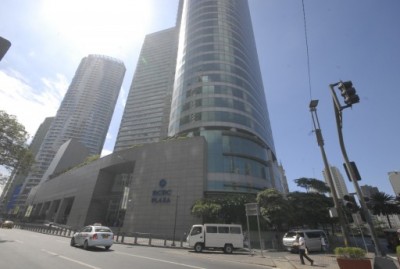
 What Bangko Sentral ng Pilipinas Deputy Governor Nestor Espenilla, Jr. disclosed about the need to increase the monetary penalties that the BSP can impose on errant banks based on the amount involved in an irregularity just goes to show that many of the rules and sanctions in place in the banking system are past their usefulness.
Espenilla, testifying at the continuation of the hearing on the embarrassing $81-million cyberheist that went through Rizal Commercial Banking Corp. (RCBC), revealed that there is a plan being broached to the Monetary Board, the BSP’s policy-making body, and the Anti-Money Laundering Council for an increase in the monetary penalties imposed on banks for unsound banking practices like the money-laundering activity at the bank’s Jupiter branch.
For Espenilla, the amount of the fine should not be just a fraction of the amount involved. In RCBC’s case of unsound banking practice related to money laundering, the fine imposed should be much higher than the P30,000 per day of violation.
RCBC has come under fire due to several violations that were uncovered related to the $81-million cyberheist that hit the Bangladesh Bank, that impoverished country’s central bank. Revelations at the hearings being held at the Senate designed to craft laws that would counter money-laundering activities have shown a couple of unsound banking practices.
Among these are the opening of bank accounts that turned out to be fictitious, this even with the KYC or know-your-client rule whereby bank branch officials are supposed to determine the authenticity of the identities of those who opened their bank accounts.
What happened is one for the books: all five accounts were deemed fictitious, and the pictures equally spurious. And yet, the BSP rule is for the banks to ask the depositors who open their accounts to present two government-issued IDs, such as the Social Security System and/or Government Service Insurance System IDs, Senior IDs, postal IDs, passports, driver’s license or Professional Regulation Commission ID.
The reason for this is simple. A bank branch should be able to ascertain fully that the name of the depositor corresponds to the name on the government-issued ID that he carries. This is to precisely curb any account opening in a bank that would turn out to be spurious. This is to preclude the use of that account for nefarious activities like the case at hand, money laundering.
Even in the withdrawal of deposits from accounts, the depositor is required to be present when signing the withdrawal slip at the bank’s teller window, which is recorded by a CCTV. In the case of the RCBC withdrawal at the Jupiter branch, the withdrawals did not follow the required protocol.
For the BSP, the money-laundering activity at the RCBC was way beyond what the present rule on unsound banking slaps on the bank. The amount of the fine, supposedly at P30,000 per violation is not indicative of the huge amount involved.
And that is where Espenilla was coming from in baring the proposal to raise the amount of monetary penalties that could be imposed on erring banks in respect of unsound banking activities.
So far, there have been many instances of questionable activities that RCBC officials have done that were unearthed at the Senate hearings. The mystery has confounded the senators that they are even willing to hold hearings even after the elections.
That just goes to show that the money laundering that has been detected at the RCBC goes beyond what the BSP had thought of when it fashioned the rules that are now said to be past their prime.
Thus, the need for the stiffer monetary penalties, the BSP official said. But could this contain money laundering especially in a high-stakes game of billions?