 The Market Monitor Minding the Nation's Business
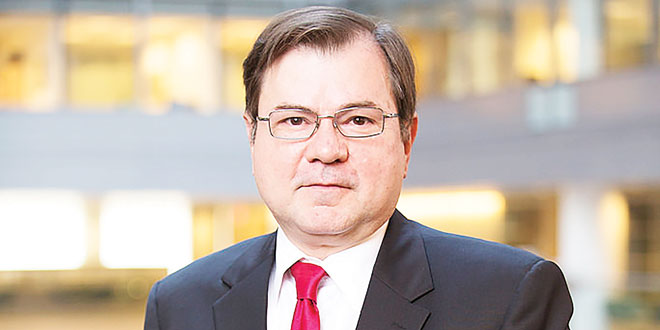
The Marawi City crisis, thus far, has a minimal effect on the economy, which is expected to continue its strong growth in the coming years, the International Monetary Fund (IMF) said in its recent assessment on the economy.
The IMF projected a slower 6.6 percent growth this year from the 6.8 percent gross domestic product (GDP) expansion last year but it said “there is no evidence that investor confidence in one of Asia’s fastest-growing economies has been hit by security worries” amid the Marawi City standoff between the military and Islamic State (IS) militants.
The downgrade in the growth forecast was the result of slower than expected economic growth in the first quarter, Luis Breuer, who led the IMF mission that just completed an assessment of the economy, said.
Breuer said he expects economic growth to be at around 6.8 percent in the medium term, supported by robust domestic demand and a recovery in exports.
He warned, however, that rapid credit growth and strong private investment could lead to overheating.
“The Philippines really stands out as a place that continues to do very well economically,” Breuer added.
“Growth is very strong while inflation is very low,” he added.
The IMF team, during its review, spoke to bankers and executives of conglomerates for their views on investments and the economy in the near term.
The IMF was assessing concerns that more than two months of fighting between the Philippine military and Islamist militants in Marawi City could dent economic growth.
IMF, in its review, found that businesses are more concerned on external risks including slower growth in China, US monetary tightening and worries over the global economy.
In its review, the IMF said economic performance of the Philippines continues to be very strong with growth to remain close to potential at 6.6 percent in 2017 and 6.8 percent in the medium term.
IMF staff team supports the authorities’ plans to raise infrastructure and social spending while avoiding overheating and preserving investor confidence.
Spending decelerates
Growth slowed to 6.4 percent in the first quarterof 2017, but this was partly due to a temporary deceleration in public spending and strong base effects following the election last year.
“The medium-term macro-economic outlook remains favorable. Growth is projected to remain close to potential at 6.6 percent in 2017 and 6.8 percent in the medium term, supported by robust domestic demand and recovery in exports. Inflation is projected at the center of the target band in 2017-18 reflecting stable commodity prices and a near zero output gap. The current account balance is projected to turn negative from 2017 and gradually widen due to higher imports driven by investment, but the external sector remains strong and international reserves ample,” the IMF said in its report.
GDP growth in the first quarter this year is below the government’s seven to eight percent full year target but economic officials are optimistic on the full-year results.
Breuer added he is confident of the approval of the Duterte administration’s tax reform proposals, now pending in Congress.
He said the tax reform will generate resources that will be used for the administration’s priority programs on infrastructure investments and social services, among others.
It will also serve as an insurance against volatilities in the financial market, especially since the government targets to finance the construction of its infrastructure projects, pegged to amount to about P8 trillion to P9 trillion until 2022, he said.
“It’s going to protect the confidence, the trust that the private sector, both domestic and international, have on the conduct of economic policies in the Philippines,” he said.
He said the reforms are important because it will also modernize the way funds are used.
“We grant significant importance on this tax reform,” he said, citing his optimism that tis will eventually be approved by Senators.
The first package of the proposed tax reforms was passed by the House of Representatives but a Senate version is still under deliberation.
“We hope the first phase of tax reform does produce an important downpayment on generating additional revenues to finance priority investments, infrastructure, social services, education, and healthcare,” he said.
“If we see broadly a tax reform that generates around two percentage point of in all of its phases over the medium term, we would say that’s a very successful tax reform,” he said.
Meanwhile, the IMF official raised the need for the amendments in the Bangko Sentral ng Pilipinas’ (BSP) Charter, noting that these “will serve the Philippines well for many, many years.”
He said there is a need to modernize the legal framework that guides the actions of the central bank, both on supervisory functions as well as its mandate to ensure that inflation remains manageable.
“This new law or the amendments to the law provide a number of tools that are very important for BSP to catch up with rapidly changing economy,” he added.
“In addition, amending the bank secrecy law and anti-money laundering framework to be more in line with international standards would be important to maintain financial integrity and confidence,” the IMF said in a statement issued after the Article IV Consultation scheduled from July 26 to August 9, 2017.