 The Market Monitor Minding the Nation's Business
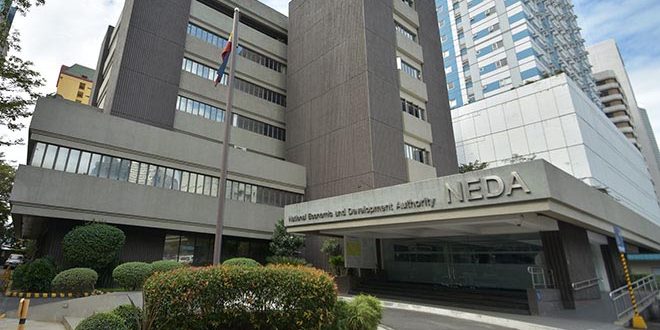
Around two dozen solicited projects are being processed by the Public-Private Partnership (PPP) for submission to the National Economic and Development Authority-Investment Coordination Committee (NEDA-ICC) for approval.
In a press conference, PPC Center Executive Director Ma. Cynthia Hernandez said that out of more than 180 infrastructure flagship projects (IFPs), around 45 are PPPs.
“These are in various stages of development. Some of them are being assisted by the PPP Center as well to go through the solicited route,” Hernandez explained.
She added, “I think within the year a substantial number of those would be submitted to NEDA, we’re thinking around 20 to the ICC”.
The ICC, a committee of the President-chaired NEDA Board, recommends the timetable of the implementation of projects as well as the fiscal and monetary implications of major national projects.
So far, the present administration has a pipeline of 185 IFPs with a value of P9.14 trillion.
Apart from solicited projects, the PPP Center also processed over 20 unsolicited proposals since the PPP Code was passed into law.
These proposals are in various processes of completing documents and undertaking negotiation.
In December last year, President Ferdinand Marcos Jr. signed into law Republic Act 11966, or the PPP Code, which seeks to establish a stable and predictable environment for collaboration between the public and private sectors. It addresses gaps in infrastructure systems and frees up much-needed resources to enable the government to pursue other equally important projects and initiatives.
The new law will incorporate best practices from decades of experience in implementing the Build-Operate-Transfer Law, and will ensure that the country will build better infrastructure projects and mitigate risks during their implementation.
With the signing of the PPP Code’s IRR, the new law will now be implemented. The IRR will take effect on April 6, 2024.
NEDA Secretary Arsenio Balisacan expressed confidence that PPPs for high-quality social and development infrastructure will continue to thrive under a “predictable policy environment”.
“It makes the governance of PPP projects more predictable so that the private sector will be more incentivized to get into PPP,” Balisacan said.
“The PPP Program is a major government initiative – in light of the tight fiscal space, it is an essential component of the President’s transformation agenda under the Philippine Development Plan (PDP) 2023-2028….We are in a hurry to get strategic investments to increase our economic growth potential. The momentum for reform and action is strong, and we are pulling out of all the stops for investors who wish to do business in one of the most promising economies in the region,” Balicasan added.
Among the salient features of the PPP Code is that the threshold for PPP project approval, all the way to the National Economic Development Authority (NEDA) Board chaired by the President, was raised to P15 billion.
Under the law, PPP projects costing below P15 Billion shall only be approved by the head of the implementing agency.
However, the NEDA Board’s ICC may still approve a project below the threshold if it overlaps with an already approved project, negatively affects a project already approved by the government, or it requires government undertaking to be funded under the national budget.