 The Market Monitor Minding the Nation's Business
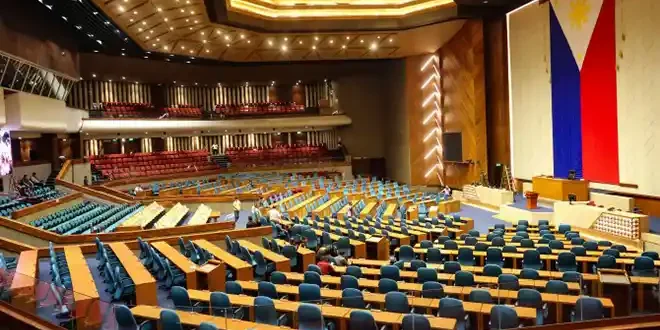
The House of Representatives has approved on second reading a bill amending the country’s bank secrecy law, which was passed several decades ago.
The new measure allows the Bangko Sentral ng Pilipinas (BSP) to look into the accounts of bank officers and employees involved in illegal financial activities.
House Bill 6707 aims to fight tax evasion, money laundering, and other financial crimes, and address the unintended consequences of bank secrecy. It also aims to align Philippine laws with international standards on transparency in financial transactions.
Representatives passed through a voice vote the measure that would “lift the barriers in the effective investigation and prosecution of corrupt or illegal financial actions of stockholders, owners, directors, trustees, officers or employees of entities supervised and regulated by the BSP.”
The central bank is given the power to look into bank deposits of the stockholder, owner, director, trustee, officer or employee of a BSP-regulated entity, as well as any of the conspirators of the person involved but only if the Monetary Board determines there is “reasonable ground” that fraud, serious irregularity or unlawful activity is being committed.
“The authority of the BSP to inquire and examine deposits shall also apply in the course of its investigation of closed banks,” the bill stated.
Under the measure, the BSP is also allowed to examine the foreign currency deposits in banks operating in the Philippines, including offshore branches of domestic banks, but not in nonstock savings and loan associations that serve only their members.
“The results of the inquiry or examinations conducted by the BSP shall be for its exclusive use and shall not be made available to any person or entity, whether public or private, except to the Securities and Exchange Commission, Philippine Deposit Insurance Corp., Anti-Money Laundering Council, Department of Justice and the Courts,” the bill said.
The measure includes a safe harbor clause that exempts banks or financial institutions and their directors, officers or employees from any action, claim, demand or liability for acts done in compliance with a BSP order on the inquiry and examination of bank deposits.
It also forbids the use of the bank secrecy law for persecution, harassment, or hindering business competition.
Violators of the proposed law may face imprisonment of two to 10 years, and fines ranging from P50,000 to P2 million, or both, depending on the court’s decision.