 The Market Monitor Minding the Nation's Business

By Rose Marie de la Cruz
I MIGHT have missed Dr. Bernie Villegas’ part 1 of his column in the Bulletin on “A call for more food banks”
I have also been writing about the need for government to ease up on bureaucratic requirements for street-based food banks like that of Maginhawa, Quezon City because this means feeding an entire family and assuring that whatever cash remains can be used for education and bills.
Dr. Villegas cited the truly effective replication of the “Balik Lusog” program in Baguio City and elsewhere to that of the detailed implementation of the food bank in Barangay Poblacion, Muntinlupa.
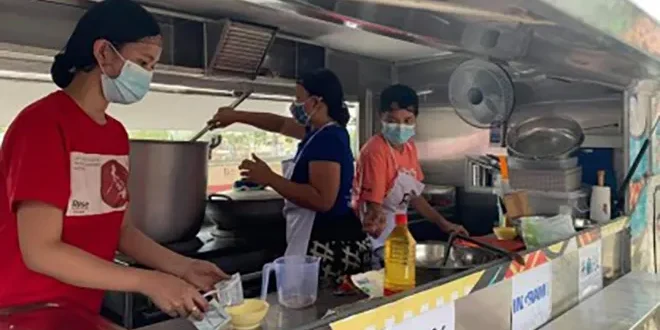
Dubbed a “Food Rescue Kitchen” ecosystem– the Muntinlupa food bank balances food safety, volunteerism, and efficient transport and logistics.
While the government– through the DepEd has occasional school feeding programs for kids below 6 years old– this program still leaves the other siblings and the parents in a state of hunger and deprivation. Though feeding the whole poor household means bigger budget, still the government keeps putting cash in ayuda programs, which it is not even sure is being used properly by the recipients.
Villegas narrated that the feeding program was conducted daily during school days from Jan. 26 to March 19, 2026 “ providentially coinciding with the high food inflation inflicting poor households as a result of the US-Iran crisis.”
During the first quarter of 2026, the Philippine economy suffered from the first signs of stagflation: very low GDP growth of 2.8 percent and core inflation of close to seven percent.
Under the guidance of RND Vilma Reyes, a rotating two-week menu was designed to maximize the nutritional value of the donated goods. The protein content came from donations by Century Pacific (tuna, sardines), Max’s Group, Inc. (chicken), and the San Miguel Foundation (Spam, luncheon meat). Carbohydrates were provided by Hikiniku (cooked rice), Tanging Yaman (uncooked rice), Max’s Group (bread), and Good Eats (snacks). Fiber and micronutrients came from Sari-Suki in the form of vegetables.
To ensure a balanced diet, supplemental proteins and vegetables had to be purchased to fill the gaps in the donation cycles, ensuring that no food waste occurred and nutritious meals were cooked and served.
There was a constant reminder that food poverty consists not only of undernutrition, but also of malnutrition and overnutrition.
To me, this is a good way of keeping those big (and small) food establishments from throwing their scraps (which could have gone instead to feeding humans and animals alike).
The food bank’s success is in efficient logistics, since donated food—except for canned or frozen items—must be served within hours of actual delivery.
As weights and raw ingredients go, donated surplus food items (such as meat, vegetables, and rice) and other ingredients needed to prepare the meals were either picked up from the donors or delivered to the Food Bank warehouse. Food requirements for one week were then delivered from the warehouse to the Loaves and Fish Community Kitchen.
Cooked rice from Hikiniku in BGC, Taguig was picked up and delivered to the Loaves and Fish Kitchen, while sanitized containers from the previous day’s operations at the school were returned. This cooked rice was turned into porridge to ensure food quality and safety. Cooked meals from the Loaves and Fish Kitchen (located in Filinvest, Muntinlupa) were picked up and delivered to the school at Poblacion Elementary School (POBES) through the volunteer work of parents from Southridge, a private school in nearby Alabang. Sanitized containers from the previous day’s feeding operations were returned to Loaves and Fish daily. The actual feeding program was implemented by five school staff members, five parent volunteers, 18 parishioners from the nearby Quasi-Parish of St. Pedro Calungsod, and 13 Southridge parent volunteers.
To determine the effectiveness of the program, a final post-feeding assessment was conducted at the end of March 2026, using baseline indicators referenced from the school’s report, Villegas narrated.
For weight monitoring, the weights of all pupils were recorded at the start of the program on Jan. 26, 2026, and again at the end of the feeding cycle on March 19, 2026. In terms of academic performance, the 3rd Periodic Test scores served as the baseline academic indicator, which were compared with the 4th Quarter Test scores to determine whether there were improvements after the feeding intervention.
The results showed 95 percent of the beneficiaries increased in weight, one percent maintained their weight, and four percent lost weight.
Also, the attendance records showed that learners who maintained or lost weight were mostly those who had inconsistent attendance, which means that consistent participation in the feeding program significantly contributed to improving the nutritional status of the learners.
As regards academic performance, the comparison between the 3rd and 4th periodic test scores showed positive outcomes. Test scores improved for most of the beneficiaries, suggesting that the feeding program contributed to better focus, classroom participation, and readiness to learn.
The results support the hypothesis that proper nutrition plays a vital role in improving learners’ academic engagement and school performance.
A third goal of the Balik Lusog was achieved, which is averting 4 tons of food waste (1.8 tons of protein, 1.3 tons of vegetables and 0.9 tons of cooked rice) thus contributing to reducing the environment’s carbon footprint.
The next goal of the Balik Lusog program is to feed all students at the Poblacion Elementary School, from Kindergarten to Grade 6, during the School Year 2026–2027 for as long as possible (or from 60 days to the entire school year).
UNICEF’s program on nutrition in middle childhood and adolescence will be used as a reference to achieve normal nutritional levels by the end of the program. Nutrition seminars will be conducted throughout the program to reach as many households as possible. Parent volunteers would be encouraged, their time permitting, and insights on causes and interventions for children identified as wasted or severely wasted will be provided.
The Balik Lusog model will continue to be refined so it can be replicated in all public schools in Muntinlupa.
The long-term goal is to have the program adopted through collaborative efforts among the DepEd, parishes, private schools, private foundations, NGOs involved in food banking, local government units, and business establishments (especially in the food industry). It is hoped that government agencies—like DoH, DA, the DILG—will help bring the Balik Lusog program to all public schools nationwide.