 The Market Monitor Minding the Nation's Business

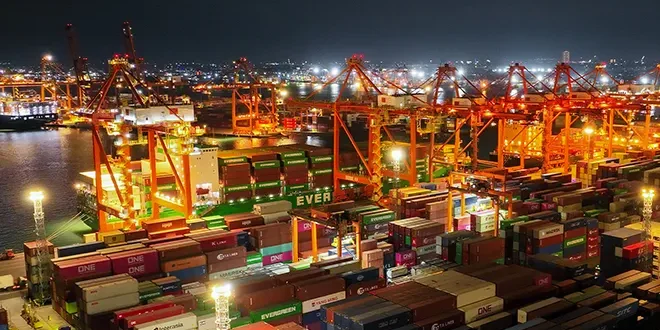
The United States is again threatening to weaponize its tariffs, this time against 54 economies including the Philippines, that have allegedly failed to effectively enforce policies against forced labor.
The Philippines could soon face additional duties of up to 12.5 percent on some of its exports to the US as a result of its failure to enforce measures banning the entry of goods produced with forced labor.
The findings and consequent policy action was made by the Office of the US Trade Representative (USTR) which recently launched an investigation into 60 of its trading partners to determine whether their reported failure to prohibit the importation of goods produced with forced labor is unreasonable or discriminatory and whether it restricts US commerce.
USTR Ambassador Jamieson Greer said the failure to act places US businesses on “an unlevel playing field” when competing with companies that enjoy an artificial cost advantage due to forced-labor inputs.
“The failure of our most important trading partners to address the importation of goods made with forced labor is unacceptable,” he said. “We will no longer tolerate this disparity.”
Based on the USTR’s findings, the Philippines has failed to impose and effectively enforce a forced-labor import prohibition, which it considers “unreasonable” and restrictive to US businesses.
“For the foregoing reasons, the results of this investigation indicate that the acts, policies, and practices of the Philippines related to the failure to impose and effectively enforce a forced labor import prohibition are unreasonable and burden or restrict US commerce,” the USTR said.
Under Section 301(b) of the US Trade Act of 1974, the USTR will now take all appropriate and feasible action to eliminate the practice, including the imposition of additional tariffs on Philippine goods.
During the investigation, Department of Trade and Industry (DTI) Undersecretary Allan B. Gepty asserted in a position paper that the Philippines has a strong legal framework prohibiting forced labor, grounded in “constitutional guarantees, detailed statutory provisions, and international obligations.”
“The absence of an explicit import prohibition does not automatically mean that the current policy and practices of the Philippines are unreasonable, discriminatory, and causes burden or restrict US commerce,” Gepty said.
“In any case, the Philippines is focused on addressing this issue to further align its trade regime with changing international norms and to eliminate any residual space for conduct involving forced or compulsory labor,” he added.
In the Philippines, local industries such as electronics manufacturing and agricultural exports are directly affected by international trade and labor reviews.