 The Market Monitor Minding the Nation's Business
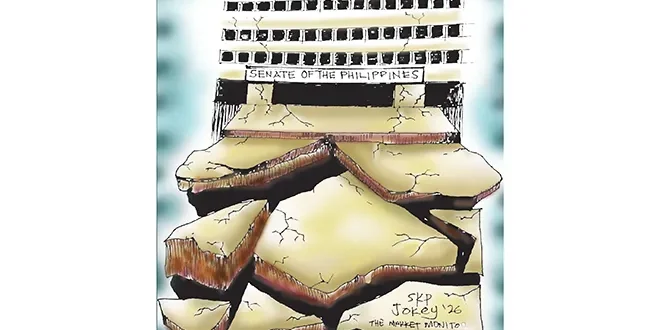
The devastating earthquake that struck General Santos and neighboring communities has exposed a painful reality that Filipinos know all too well: natural disasters may destroy homes and livelihoods, but political instability often worsens the suffering long after the ground stops shaking.
Major business organizations have recently voiced concern over the continuing power struggle in the Senate, warning that uncertainty in government discourages investors and undermines economic confidence. Such statements are significant because these business leaders rarely involve themselves in political controversies. Their focus is usually on productivity, employment, and economic growth. For them to publicly express alarm indicates that the situation has reached a level that can no longer be ignored.
While consumers grapple with rising prices and shrinking household budgets, government institutions that should be delivering stability appear consumed by internal political battles. The Senate intramurals have become so intense that they now rival the magnitude of the General Santos earthquake. Many Filipinos understandably question whether elected officials are focused on the urgent needs of quake victims or on the next round of political maneuvering, including the looming impeachment pre-trial.
Relief operations reveal a familiar pattern. Senior officials visit affected areas, cameras document promises of assistance, and announcements are made regarding the release of millions of pesos. Yet residents in remote communities often wait days or weeks before receiving even the most basic necessities. Many survive through the generosity of neighbors, local volunteers, churches, and civic groups rather than government aid.
The appeal of the Public Works Secretary to seek greater private-sector participation in relief and rehabilitation efforts deserves support. Reconstruction requires far more than emergency food packs that last only a few days. Families need homes rebuilt, schools repaired, roads restored, and livelihoods revived. These are long-term commitments that will take years, not weeks.
Equally troubling is the growing gap between promises and delivery. Free construction materials remain scarce, while the pledged P50,000 assistance for affected families continues to exist largely in news reports rather than in the hands of survivors.
Earthquakes are unavoidable. Political distractions are not. At a time when disaster victims need decisive leadership, public officials must demonstrate that service to the people outweighs service to political ambition.