 The Market Monitor Minding the Nation's Business
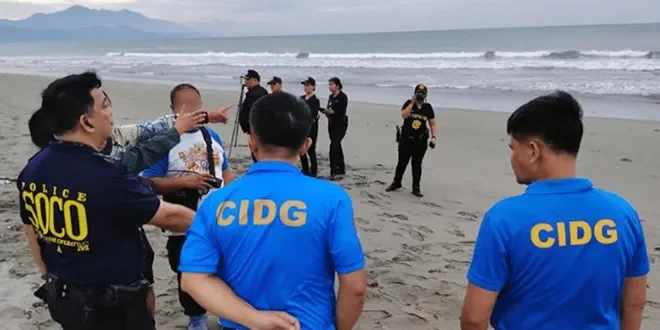
Hermanos Leisure Farm, the resort where two of the Ateneo men’s basketball team drowned, is not accredited with the Department of Tourism (DOT).
Ma. Rica C. Bueno, DOT Undersecretary for Tourism Standards, Regulation and Human Capital Development said, “The resort is not DOT-accredited.” She added DOT regularly reminds the public to book only at accredited accommodation establishments.
A DOT accreditation assures guests that a hotel or resort complies with minimum standards for safe, reliable and high-quality operations. Aside from accommodation establishments, other primary tourism enterprises (PTEs) that are mandated to secure DOT accreditation are travel and tour services, tourist transport operators, organizers or venues for MICE (Meetings Incentives Conventions Exhibitions), adventure/sports and ecotourism facilities and tour guides.
Since the Hermanos resort is not DOT-accredited, no penalties can be imposed by the agency. However, DOT Director for Tourism Standards and Regulation Virgilio M. Maguidad said, “The maximum penalty has already been imposed by the LGU [local government unit of Dipaculao, Aurora], a temporary closure order.”
Bueno added that, “There was a lifeguard,” at the time of the accidental drowning of the two basketball players, contrary to rumors.
The incident underscores the need for the strict regulation of tourism enterprises and shows the misalignment between LGUs and the DOT in allowing PTEs to open and start offering their services to the public.
LGUs are mandated to “ensure strict compliance of tourism enterprises with these [DOT] standards” for the accreditation of PTEs. Even the Department of Interior and Local Government (DILG) reiterated in a DILG advisory in 2022, that “LGUs have to ensure that all PTEs have complied with and have obtained DOT accreditation before operations.”
Meanwhile, a source shared that Hermanos is “a bit off the beaten track. It’s isolated from Sabang Beach, where tourists go for surfing.” He described its waters as “rough and treacherous,” even during non-Habagat (southwest monsoon) months, so “you may be standing on sand but when the wave pulls back, sometimes you feel the sand beneath you disappear.”
The source added, “The water may be waist-deep, but the waves may be taller than you and drag you into the ocean.” The province of Aurora faces the Pacific Ocean, and is regularly visited by typhoons.
Surfing season in the province is from October to February, followed by March to May for the regular summer break. Even during the off-peak period from June to August, weather is erratic with monsoon thunderstorms affecting its coastline.