 The Market Monitor Minding the Nation's Business
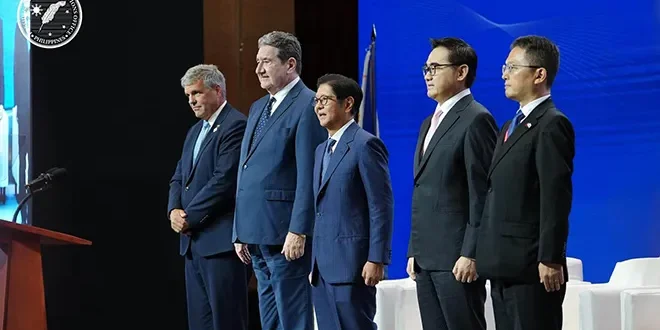
President Ferdinand R. Marcos Jr. is urging investors to make the Philippines a long-term business base, citing improved infrastructure, skilled workers, and continuing reforms.
Speaking at the Luzon Economic Corridor (LEC) Investment Forum at the Grand Hyatt Manila in Taguig City last week, Marcos said the administration wants investments that create lasting economic value—not simply capital that enters the country and leaves after generating short-term returns.
“We want companies to establish long-term operations, transfer knowledge and technology, develop Filipino talent, and work with local suppliers. We want Filipino enterprises to become producers, innovators, exporters, and investors in their own right,” he said.
The President positioned the Luzon Economic Corridor as part of a broader effort to strengthen the country’s industrial base and attract investments into sectors where the Philippines can build higher-value capabilities.
Among the opportunities he highlighted are renewable energy, digital infrastructure, semiconductors and electronics, maritime industries and critical minerals.
Marcos said the Philippines is building the digital infrastructure needed to support a technology-driven economy while preparing Filipino workers to move beyond traditional lower-value services.
“We are expanding secure connectivity and advanced computing infrastructure. We are strengthening cybersecurity and establishing safeguards for the responsible use of AI (artificial intelligence),” he said.
“The Philippines already has a strong base of digitally capable workers. We are enabling them to move into the higher-value work and helping Filipino enterprises become creators—not merely users—of the new technologies,” Marcos added.
The President also pointed to opportunities for the country to deepen its participation in the semiconductor and electronics supply chain, particularly in design, research and engineering.
The country’s geographic position and skilled workforce, meanwhile, could support further growth in shipbuilding, ship repair, marine engineering and other maritime activities.
Marcos also wants the Philippines to extract greater economic value from its critical mineral resources by encouraging domestic processing and manufacturing instead of relying primarily on exports of raw materials.
The strategy reflects a broader push to attract investments that generate jobs while allowing Filipino businesses and workers to participate in more stages of the value chain.
“Across all these sectors, our goal is not simply to attract investment. We want investment that strengthens our economy and expands Filipino capability,” he said. “And we want Filipinos to capture a greater share of the value created in our country. This is why we are investing in our greatest asset—our people.”
Marcos also cited recent policy measures designed to make the Philippines more competitive as an investment destination.
These include the CREATE MORE Act, the Public-Private Partnership Code and the green-lane system for strategic investments, alongside continuing efforts to streamline regulations.
For investors, the objective is to make government processes more predictable and reduce delays that can affect the cost and timing of major projects.
“We understand what long-term investors require: consistent rules, credible institutions, timely decisions, and commitments that are honored,” Marcos said.
“You can place your trust in the Philippines. We know that trust is earned through consistent action,” he added.
The President said the government would focus on providing policy direction and a stable investment environment, while the private sector would supply the capital, technology and expertise needed to turn investment plans into operating businesses.
The administration is particularly seeking partnerships that connect foreign investors with Filipino companies, suppliers and workers, allowing domestic enterprises to gain technology, skills and access to international markets.
Marcos urged business leaders to look at the Philippines not merely as a consumer market but as a long-term production and investment base.
“We want you to regard the Philippines not simply as another market, but as a trusted partner and a place where you can build, innovate, and grow for generations,” Marcos said.