 The Market Monitor Minding the Nation's Business

A new wave of dramatic movies and docudramas that depict the horrors of Martial Law and beyond, its protagonists and antagonists, is flooding the market.
Late last year, Cignal TV, MQuest and Spring Films’ “Manila’s Finest” had brought back vividly the atrocities of the past in our society.
Although Raymond Red’s “Manila’s Finest” is a work of fiction, it is derivative of the historical events that shaped the social and political milieu, the economic matrix, the cultural tapestry and the overall society of the Philippines at the onset of Martial Law, to the emergence of the New Society to the aftermath of the dictatorship.
It may not explicitly point to the real events and people of the eras but true enough in the atmosphere and ethos of the decades in transition.
“Manila’s Finest” is the microcosm of a larger order in realpolitik.
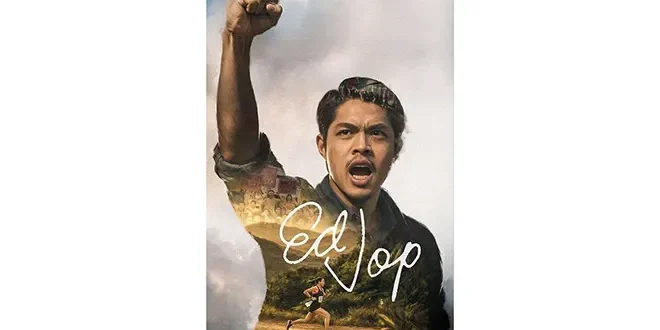
Meanwhile, Katski Flores’ “Edjop” is a biopic that depicts a palpable human being in the web of the socio-political battlefield.
Here is Edgar Mirasol Jopson, an elite student of a high-end educational institution such as Ateneo de Manila University, who opted to depart from the traditional if not pragmatic sense of consumerist idea of schooling—that of getting a diploma as a passport for employment and a surefire formula for success stories—marry, build a home, raise and support a family, get into the business of symbiosis to get ahead in life etc., instead, he went underground to change the rotten system of the dog-eat-dog disorder and to establish an ideal if not a communal society.
Death, inevitably, was the price he had to pay in the struggle to annihilate or nihilize the bourgeois—his own class.
Alongside “Edjop” is the rescreening of Malu Maniquiz doc film “Lean,” about a student leader—from another intellectually elite school inclusively for the masses as well, the University of the Philippines—Leandro Alejandro, better known as Lean, who was to become a larger-than-life image of a revolutionary urban warrior especially in the labor front who met his end in the hands of the oppressors.
The premiere showing at the Met of the 4k digitized version of the classic Mike de Leon masterpiece, “Sister Stella L” (1984) about the awakening of a reactionary religious person into a nun who is now committed to uphold the economic rights of the working class to emancipate them from poverty is a testament of liberation theology in pursuit of a Christian doctrine on prosperity and equality.
I hope the Dalena sisters’ (Sari and Kiri) independent movie “The Guerilla is a Poet” or Kip Oebanda’s “Liway” and other like-minded screen creations like Lino Brocka’s “Orapronobis (Pray for Us)” or Lav Diaz’s “Hesus Rebolusyonaryo” or Joel Lamangan’s “Bakit May Kahapon Pa?” or Gil M. Portes’ “Andrea, Paano Ba Ang Maging Isang Ina?” etc. are pulled out from the archives of Cinemalaya and other film outfits to enjoy the season fertile for democratic cinematic fiesta to remind us “never again,” “never forget” and ponder on the significant lessons of the subjects.