 The Market Monitor Minding the Nation's Business

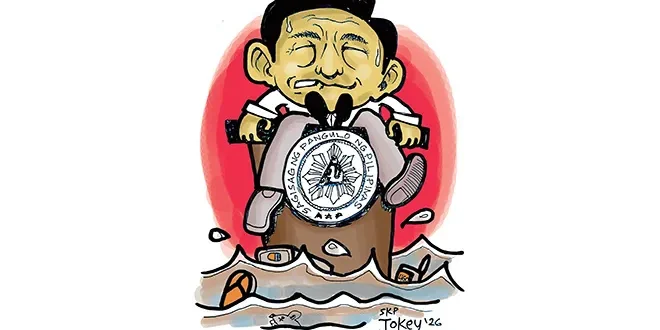
After former House Speaker Martin Romualdez gets detained over alleged irregularities in flood-control projects, it would be one of the most consequential developments in the administration’s anti-corruption drive.
The Ombudsman has said it is preparing multiple cases against him, while government authorities continue efforts to bring former Rep. Zaldy Co back to the Philippines to face charges related to alleged ghost flood-control projects.
But a prosecution is not a conviction. An arrest is not proof of guilt. The government must still establish its cases with evidence that can withstand judicial scrutiny. The credibility of the Ombudsman’s investigation will ultimately depend not on the prominence of those being investigated, but on whether the evidence survives in court.
And therein lies the larger problem.
Even as the government presents the flood-control investigation as evidence that accountability is moving, Filipinos are still dealing with problems that cannot be arrested away.
Flooding remains a recurring threat despite years of enormous public spending on projects supposedly designed to prevent it. Investigations into alleged ghost, substandard and ineffective projects may identify those responsible, but they will not protect the community from the next flood.
Fuel prices remain another immediate burden from households to businesses. Government monitoring provides information, but information alone does not make transportation or daily necessities cheaper.
The political landscape is hardly reassuring either. The Vice President’s impeachment case remains governed by the constitutional requirement of a two-thirds Senate vote for conviction. Meanwhile, concerns over election security and political violence remain relevant as the country moves toward the 2028 national elections.
This is why government cannot confuse legal action with national recovery.
Filipinos need more than prominent names facing investigation. They need flood-control projects that actually control floods, public money that reaches its intended destination, manageable energy costs, credible elections and institutions that apply the law consistently.
The harder challenge is this: Can government prove that the flood-control scandal is not simply another corruption story that ends with a few people in court, while the system that allowed billions of pesos to be wasted remains intact? Until government can answer that question with results—not promises—the biggest fish caught will matter far less than the bigger problem still swimming free.