 The Market Monitor Minding the Nation's Business
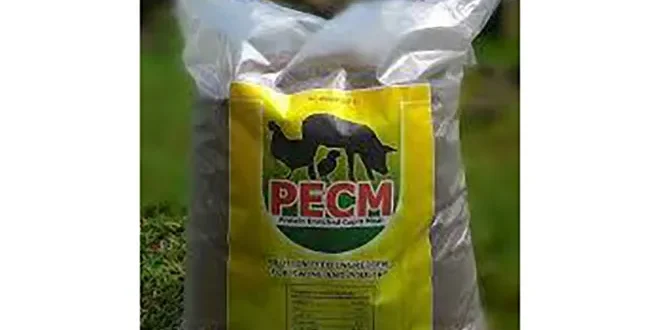
The Department of Agriculture (DA) is expanding its copra meal project to Western Visayas to provide a cheaper protein source alternative for animal feeds in the region.
Agriculture Secretary Francisco Tiu Laurel Jr. said he ordered the expansion of the Protein-Enriched Copra Meal (PECM) commercialization project to the region to boost local livestock production.
He said this development is expected to benefit local farmers and feed producers in the region who have been grappling with rising prices for traditional feed ingredients.
“The program not only helps reduce feed costs but also supports the local economy by creating new markets for coconut by-products, which are often underutilized,” Laurel said in a statement.
The PECM project was initially rolled out in Calabazon and Soccsksargen in 2022 as a response to supply disruptions caused by Covid-19 and the ongoing Russia-Ukraine war.
It was designed to temper the rising costs of animal feed by using copra meal–a byproduct of coconut farming–as a cheaper substitute for imported soybean meal, which has become increasingly expensive due to global supply chain issues.
The agency said PECM was engineered through a solid-state fermentation process, developed by the University of the Philippines-Los Baños (UPLB) Biotech Center, which enhances copra meal’s protein content to about 45 percent. This percentage is comparable to soybean meal which is a crucial component in animal feeds.
It added that the enriched copra meal has been “successfully” incorporated into the diets of finfish and shrimp, with feeding trials showing that including 200 kilos of PECM per metric ton (MT) of finfish feed and 100 kilos per MT of shrimp feed leads to a 3.9 percent and 0.4 percent reduction in feed costs, respectively, compared to conventional commercial feeds.
“While Covid-19 has passed, the Russia-Ukraine conflict continues to disrupt global feed ingredient supply chains, keeping prices for essential commodities like soybean meal, feed wheat, and corn elevated,” the DA said.
Russia and Ukraine account for about 30 percent of the global feed grain supply, further exacerbating the pressure on feed prices.
The agency said the PECM project is a collaboration between the DA, the Department of Science and Technology-Philippine Council for Agriculture, Aquatic, and Natural Resources Research and Development, UPLB, and various farmers cooperatives and associations (FCAs).
“By expanding the copra meal initiative, the DA aims to strengthen food security, improve local feed production, and promote more efficient use of agricultural by-products in livestock farming.”
Citing data from the Philippine Statistics Authority (PSA), the DA said that only hog production in Western Visayas saw a decline last year, when it dropped by 23 percent to 158,471 metric tons (MT).
It added that carabao production rose by 3.9 percent to 17,159 MT, while cattle production inched up by 0.1 percent to 19,007 MT. Goat production jumped by 11 percent to 7,105 MT.
Meanwhile, chicken production in the region last year went up by 4.8 percent to 131,926 MT, while chicken egg output rose by 7.9 percent to 40,015 MT.
Duck production, however, declined by 1.9 percent to 2,722 MT, and duck egg production fell by 5.4 percent to 4,306 MT.