 The Market Monitor Minding the Nation's Business
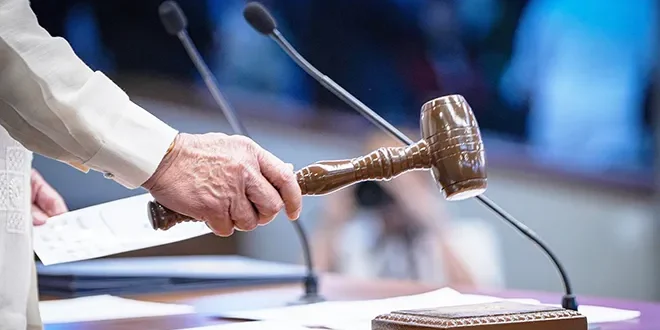
A measure seeking to expand digital payments in government transactions has moved closer to approval after it passed second reading at the House of Representatives of the Philippines on Wednesday night.
House Bill No. 8468, also known as the eBayad Act, aims to institutionalize safe and efficient digital payment systems for transactions involving government agencies and merchants.
Under the proposed law, covered agencies would be required to use secure and inclusive digital disbursement methods for payments related to goods and services, government assistance, and other official expenses. The system would also cover the payment of salaries, wages, allowances, and honoraria of personnel across national government agencies, government-owned and controlled corporations, local government units, state universities and colleges, local colleges and universities, as well as relevant government offices abroad.
The measure allows agencies to directly transfer funds to recipients through automatic debit arrangements, interoperable electronic fund transfers, or other facilities provided by government-serving payment service providers. The goal is to ensure that financial assistance and other payments reach beneficiaries more quickly and with fewer procedural steps.
On the revenue side, the bill mandates government offices to provide digital payment options for taxes, tolls, fees, and other government collections while still keeping cash as an available alternative. It also recognizes electronic official invoices and receipts as valid proof of payment, subject to existing accounting, audit, and tax regulations.
To ensure coordinated implementation, the bill proposes the creation of a steering committee chaired by the Bangko Sentral ng Pilipinas, with representatives from key government agencies. The body will guide procurement, promote cost efficiency and transparency in acquiring digital payment solutions, and address issues that may arise during the transition to digital systems.
Local governments will also play a role in expanding the use of digital payments. The measure directs LGUs to pass ordinances providing incentives for merchants to adopt digital payment platforms, including reduced fees and other forms of support. The program aims to help small and micro-entrepreneurs such as market vendors, tricycle operators, and food stall owners accept digital transactions.
The bill further directs the Securities and Exchange Commission and the Bureau of Internal Revenue to develop incentive programs encouraging digital payments. It also allows the BSP, in consultation with stakeholders, to implement graduated pricing schemes or exemptions for micropayments.
In addition, the BSP will be tasked with preparing a multi-year roadmap aligned with the government’s e-government master plan, outlining targets and expected outcomes for at least five years.
The proposed measure provides a transition period of up to three years, with implementation guidelines based on the capacity of each agency. It also highlights the need for strong security measures, requiring protection of data and information systems used in digital payments and imposing obligations on payment service providers regarding data privacy, cooperation with post-audits by the Commission on Audit, and compliance with payment system agreements.
House Majority Leader Ferdinand Alexander ‘Sandro’ Marcos said the proposal seeks to address everyday difficulties faced by Filipinos in dealing with government transactions.
“We are inching closer to mandate digital payments in all government transactions,” Marcos said in a statement Thursday.
Marcos added that the eBayad Act aims to reduce delays, long queues, and reliance on cash-only systems in public offices.
“Hindi dapat nauubos ang oras ng tao sa pila at pabalik-balik na transaksiyon (People’s time should not be wasted on long lines and back and forth transactions). Through the eBayad bill, we are building a government that delivers faster, cleaner, and more convenient transactions for ordinary Filipinos,” he said.
The proposed legislation forms part of the priority measures under the Legislative-Executive Development Advisory Council’s Common Legislative Agenda.