 The Market Monitor Minding the Nation's Business
Phishing attacks that rely on malicious links have emerged as the fastest-growing digital threat in the Philippines, based on findings from the Whoscall 2025 Philippines Scam Report.
The study, released by Gogolook Philippines—the cybersecurity firm behind the Whoscall anti-scam app—showed a sharp rise in risky URLs, climbing from 13,602 in the first quarter to 49,431 by the end of 2025, nearly quadrupling within the year.
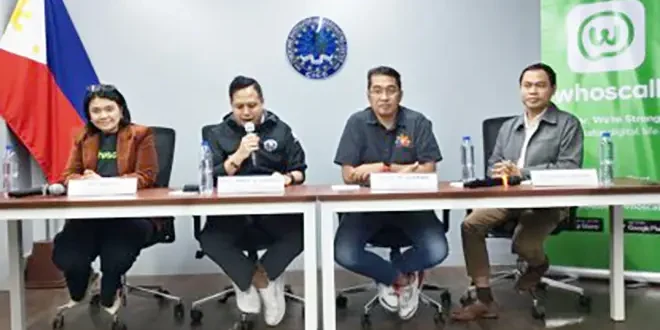
Speaking at a press briefing at the Cybercrime Investigation and Coordinating Center (CICC) headquarters in Quezon City on Thursday, Gogolook general manager Mel Migriño said the data highlights how quickly scammers are adapting their methods.
“Scammers are shifting from calls and texts toward malicious links and fake social media sites because uniform resource locators (URLs) are easier to spread, harder to verify, and far more scalable,” Migriño said.
While scam calls and short message service (SMS) incidents declined year-on-year in some categories due to improved filtering systems and stronger enforcement, link-based phishing—especially those embedded in messages and social media platforms—posted significant growth.
Migriño stressed that countering the surge in phishing attacks will require close cooperation among government agencies, the private sector, and ordinary citizens.
“Technology alone can’t solve this. We need to empower Filipinos with knowledge and tools to recognize and avoid scams before they take the bait,” she said.
She pushed for collaborative efforts such as joint information campaigns, community-based training, and digital initiatives that transform scam data into clear, practical advice, while strengthening official reporting channels and victim support systems.
Migriño also advised consumers to adopt simple but proactive safety habits, including using anti-scam applications like Whoscall.
“Before you click a link or answer a call from an unknown number, pause and check,” she said.
At the same time, she warned businesses—particularly banks, e-wallet providers, e-commerce platforms, and other online firms—to stay vigilant against brand spoofing and impersonation.
CICC Executive Director Renato “Aboy” Paraiso, meanwhile, thanked Gogolook for contributing valuable insights derived from public reports.
“This can be a source for actionable intelligence. When scam data is responsibly shared, it allows us to spot patterns, trace digital footprints, and respond faster to emerging threats,” Paraiso said.