 The Market Monitor Minding the Nation's Business

By Rose Marie de la Cruz
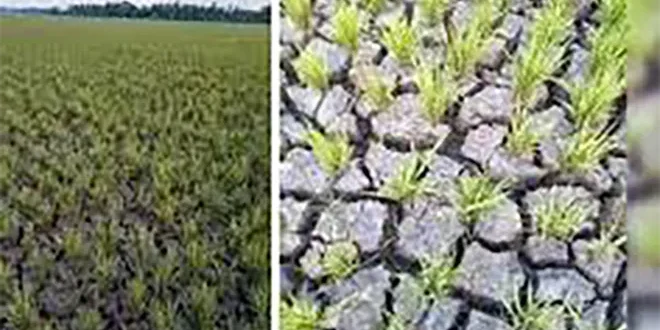
Vast tracts of farmlands in the country have become parched from the blunders of the National Irrigation Authority to service water through its national systems, which had cost the government P2 billion of wasted investments.
The Commission on Authority last February 1 released its report recommending that contracts be rescinded, bonds forfeited, court cases be filed against contractors and sanctions against those responsible in the water agency.
In the report, the COA said NIA failed to plan and oversee projects properly, leading to missed deadlines and billions in idle funds. It also recommended the filing of administrative sanctions against NIA officials and staff whose negligence contributed to the backlog since the Duterte administration.
Just recently, former Agriculture Secretary Emmanuel Pinol exposed an anomalous irrigation project in Mindanao which caused flooding in an otherwise flood-free barangays because the NIA and the Department of Public Works and Highways just abandoned a national irrigation system that should have served thousands of palay farms in the South. He appealed to their sense of duty to visit the site and help the residents who could not plant on their water-soaked farms.
The scope of the problem is staggering: 161 contracts suffered delays ranging from one month to over three years, with many originally set for completion in 2021, 2022, and 2023. The cost of these stalled projects reached a staggering P2.04 billion, Rappler reported recently.
Luzon’s second largest contributor to the rice supply– Cagayan Valley in Region II, bore the brunt of the delays. Most of the unfinished projects worth P1.04 billion were concentrated in Region 2 raising concerns about accountability and project management within NIA.
“With billions tied up in incomplete infrastructure, pressure is mounting on the agency to overhaul its operations and deliver long-overdue irrigation systems,” COA was cited by Rappler.
The breakdown of delayed projects is: Cordillera Administrative Region with 36 projects; NIA-Magat River Integrated Irrigation System (MARIIS) with 30 projects; Isabela-Irrigation Management Office (IMO) with 25 projects; Lamisca-IMO (Lanao del Norte-Misamis Occidental-Misamis Oriental-Camiguin) with 23 projects and NIA-Cagayan Valley with 19 projects
Other offices cited in COA’s report: Cagayan-Batanes IMO with 9 projects; Eastern-Western Samar IMO with 8 projects; and Northern Samar IMO with 7 projects
The COA also noted slight delays in Quirino IMO, NIA-Central Visayas, NIA-Davao Region, Davao Oriental IMO.
Other delayed projects and their values were: Lamisca-IMO at P216.35 million; Isabela IMO at P183.08 million; and MARIIS at P161.63 million
“Compared with prior year’s data, the number of irrigation contracts/projects that incurred delays in the implementation increased by 94 percent or 78 contracts/projects from 83 in CY 2022 to 161 in CY 2023,” COA said.
The impact of the delays go beyond the balance sheets as farmers depending on irrigation to sustain their livelihoods suffered setbacks in reduced yields and having unplantable parched lands.
COA said the agency even gave so many reasons for its inability to complete such projects: flooded or unworkable sites, underperforming contractors, a shortage of manpower and equipment, last-minute design changes, right-of-way disputes, and even standing crops obstructing construction.
It said that the problem is deeper since aside from the stalled projects, another 75 – collectively worth P5.06 billion – remain in limbo, either suspended or given contract extensions. And the failures aren’t limited to domestic funding.
A foreign-backed irrigation initiative, with a price tag exceeding $193.49 million, has also been delayed, further showing the NIA’s struggle to deliver on its mandate, Rappler quoted COA.
“In view of the significant delays, ranging from 31 to 1,113 calendar days in the completion of 161 irrigation contracts/projects and the suspension of and/or granting of CTEs on 76 irrigation contracts/projects, the intended beneficiaries were not able to promptly benefit from these irrigation projects,” COA stressed.