 The Market Monitor Minding the Nation's Business
By Rose de la Cruz
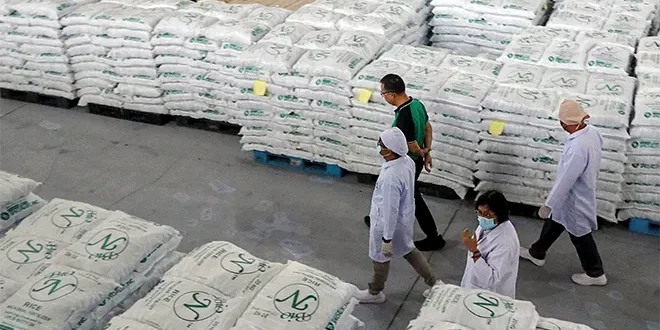
The AgriSpecialists Inc. (ASI) can now sell and distribute its BioN biofertilizers for use in rice and all other crops.
The announcement came after the Laguna-based company finally secured its certificate of product registration (CPR) from the Fertilizer and Pesticides Authority (FPA) allowing it “to sell and distribute its Bio N biofertilizer.”
FPA Executive Director Glenn DC Estrada said the release of certificate of product registration to ASI would help the Department of Agriculture get closer to its sustainable farming objective by regenerating farmlands, whose soils have been greatly degraded with the prolonged use of chemical fertilizers.
This would also help farmers reduce their production costs by at least half, which before required the use of 4 to 5 bags per hectare of costly imported chemical fertilizer urea by augmenting their inputs with five packets of nutrition-rich Bio N 500 grams, according to ASI president/CEO Dr. Mario Labadan.
A five-pack Bio N (nitrogen-fixing) biofertilizer (of 200 grams per pack) would cost P500 and would be good for a hectare and can reduce at least two bags of urea costing over P2,440 per 50 kg bag as of December 2021.
Estrada said current urea fertilizers in the world market range from P1,300 to P1,400 per bag now.
The prescribed urea use per hectare is four to five bags but most farmers have not been able to afford applying this much urea to their farms because of the stiff prices, which are dictated by global price movements.
In addition, the imported fertilizer can exert much drain on our foreign exchange reserves while ASI’s Bio N is locally produced by state university, University of the Philippines in Los Banos.
Estrada said the CPR given to ASI for rice is good until January 31, 2026 while that for all other crops is until January 31, 2028.
The Bio N fertilizer of ASI for rice has Bentonite as carrier with Azospirillum while its CPR for all other crops has soil and charcoal as carrier and Azospirillum for biofertilizer.
The FPA regulates all fertilizer and pesticides that enter the country as well as soil additives, biofertilizer and other ameliorants applied to agricultural farms. Even drones used in mechanically applying fertilizers and pesticides must be regulated in terms of volume and composition of ingredients by the FPA, Estrada explained.
Estrada, in an interview, said the trend in ASEAN is gradual replacement (reduce one bag of urea per hectare but not totally eliminate it) with biofertilizer as an entry point to sustainable farming and to regenerate their soil.
Estrada said there are currently 1,000 manufacturers (albeit small backyard operators) of biofertilizers and that this subsector is now making it to the mainstream and to the consciousness of farmers, who view it as a relief from the costly chemical fertilizer.