 The Market Monitor Minding the Nation's Business

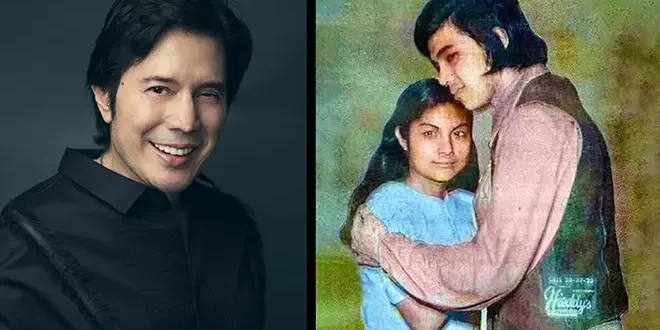

In his passing, it is quite a thought, however late, to reflect on this.
Although rare and accidental, it might recur to others who could be deserving but industry’s stakeholders simply shrugged off the forces that could either thwart or advance their headways.
Let this serve as a reminder if not a warning.
Among movie actors in the lead category launched and had prospered, endured in the late sixties, the entire seventies to the eighties onwards, it’s only Victor Laurel who lagged behind or worst, left in the cold, in the sustenance of his starring in big, modern filmmaking in the advent of a new decade and beyond.
While Christopher de Leon, Tirso Cruz III, Rafael “Bembol” Roco, Jr., Phillip Salvador, Rudy Fernandez, Ace Vergel, Lito Lapid, Joel Torre, Gabby Concepcion, Albert Martinez, Jay Ilagan and their ilk have sustained their supremacy in the market which also included the strength of acting prowess (in life but naturally ends in death in the corporeal sense), Victor was never considered to prolong his staying power in the biz.
To think that he had the looks, the built, the connections, legacy, aesthetics, solid background in multimedia, built-in fan base courtesy of his theater circle no matter how elitist and his association with the mass audience rubbed off from his perennial leading ladies and other essentials to make it in the movies.
Victor had matched the matinee idol template an enterprising impresario couldn’t easily dismiss to put one’s money where one’s mouth was to harvest profits and yes, some did.
It was Premiere Productions that gambled and set the tone, got Nora Aunor to star opposite Victor Laurel, a virtual unknown in the teenybopper world but already a name to reckon with in English theater and high society not excluding his political influence as a son of then senator Salvador Laurel.
The bakya crowd was easy to please and its queen, Nora was adored and sold-out to pair off with an untested love team in the film project “Lollipops and Roses,” a light musical rom-com.
The result was a smash hit.
To carry on, the Laurels invested on making movies as well and put up VL Productions inspired by the box-office performances of its scion, this time employing another royalty of the masses, the future Star for All Seasons Vilma Santos in a drama fantasy, “Ophelia at Paris” directed by the lead actor’s mom, Celia Diaz-Laurel.
To replicate the success of the maiden team-up, however hectic Nora’s schedule was, a sequel, “Lollipops and Roses at Burong Talangka” was again shot in the US by the Laurel outfit which eventually made money at the tills.
Then came “Disco Fever” from Lea Productions followed by “Pinay, American Style” from Regal Films, and again, Cocoy acted with Vilma in both projects.
Prior to these, however, 1973 Miss Universe Margie Moran was tapped by VL company to team up with Cocoy in “Oh Margie Oh” which reportedly also made a killing at the box-office.
Musical or plain drama, Victor excelled.
Why couldn’t he be as durable as other male stars in his mold among his contemporaries?
He was more than a star material who could easily give Tirso or Christopher a run for their looks and acting mettle. Consider these: Cocoy had an early intensive and extensive training in acting (here and abroad), particularly, theater—the foundation and tradition of film—which is more strenuous, immediate, spontaneous and demanding compared to mimesis on film and TV which are remediable like take twos or a camera angle can be tweaked according to the emotional state of the character.
Even if most of Cocoy’s films were musical, he could very well develop into a fine actor onscreen as he was onstage portraying The Engineer in the Australian production of “Miss Saigon,” Pippin in “Pippin,” Jean Valjean in “Les Miserables,” King Arthur in “Camelot,” Emil LeBecque in “South Pacific,” Che Guevarra in “Evita,” and a lot more, all if these in Repertory Philippines.
If he could be the best onstage, why couldn’t onscreen?
His social status wasn’t an issue anymore because he was already accepted as one with the mass viewing audiences in his films with Nora, Vilma and Margie.
He had the rare opportunities to work with the best, the finest and most popular actresses in Philippine cinema not excluding Hilda Koronel in Lea Productions’ “Till Death Do Us Part.”
Victor was a kind, sincere soul in person that everyone in showbiz must have attested to it.
Producers and talent casters must be blinded by misconception or misjudgment in taking Cocoy to the backburner.
Was he a victim of casting intrigues?
Or was it his choice to stick to theater?
He unexpectedly ended his movie career as early as 1982.
There were other talented and good-looking actors who should have been as famous as their batch mates in the 70s and 80s like Joseph Sytangco, Ting Jocson, Jojo Abella etc. but they purportedly preferred to take the backseat or fade into oblivion.
We could only say “sayang (regretful)” to these promising actors whose showbiz careers were nipped in the bud.