 The Market Monitor Minding the Nation's Business
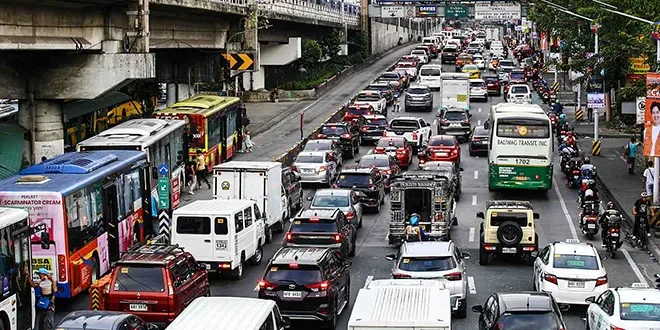
An artificial intelligence (AI)-powered mobility app recently showed that only 23% of road space has been allocated for pedestrians, while about 47% of people who are traveling and using private vehicles take up a massive 77% of our highways, depicting an imbalance in road use.
Dr. Syrus Gomari, a Filipino researcher, believes that putting people first is key to improving public transportation, especially in high-density urban centers.
Department of Science and Technology (DOST) Secretary Renato U. Solidum Jr. said, “We at DOST are proud to see how a balik-scientist like Dr. Gomari is using their global expertise to help the country, especially in emerging and interdisciplinary fields like smart mobility, urban systems and artificial intelligence.”
Dr. Syrus Gomari is one of 710 Filipino scientists who returned to the country through DOST’s Balik Scientist Program (BSP). He is sharing his global expertise and helping improve urban planning across the country.
During a recent presentation as a balik-scientist, Gomari said, “The question should not be ‘How do we move more cars?’ but ‘How do we move more people efficiently?’ When we shift from car-centric to people-centric thinking, solutions expand beyond road widening to integrated transport systems, active mobility and smarter urban design.”
DOST Undersecretary for Research and Development Dr. Leah J. Buendia, program lead of BSP, supported Gomari, saying, “The Balik Scientist Program continues to be a vital bridge in bringing homegrown talent and global expertise together for nation-building. By integrating AI into transport and urban planning, we are not only addressing traffic congestion but also building safer, more inclusive, and more sustainable communities.”
Gomari earlier worked with local officials of Pasig, Taguig and Quezon City for the pilot testing of SEERMO, a mobility app.
He reported the importance of moving beyond traditional planning models by incorporating an understanding of people’s behavior and decision-making in mobility choices—such as use of walk paths and public transportation.
His SEERMO targets up to 10 times faster planning using AI-driven data and analytics compared to traditional consultancy and manual data gathering.
By integrating behavior-aware datasets of pedestrians and commuters, the AI mobility technology makes it possible for large cities to shift from vehicle-centric traffic counts to people-centric mobility planning.
The SEERMO app functions like a CCTV system, but instead of manual counting, the process is automated through computer algorithms
Reporting on-ground incidents and transport infrastructure problems can now be done via smartphones. SEERMO also combines field data reports and government records into a single database.
The app also provides detailed results for each district or road section, showing how movement in one area impacts another, instead of just providing city-wide totals.