 The Market Monitor Minding the Nation's Business
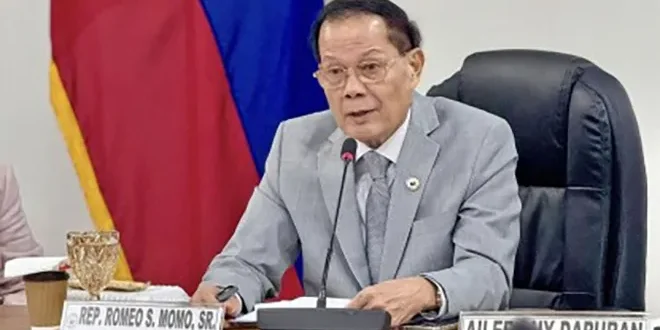
The House of Representatives is pushing for a bigger infrastructure budget in 2027, arguing that increased government spending on roads, bridges and other public projects could provide a much-needed boost to economic growth and employment amid a slowdown in the Philippine economy.
The chamber is considering raising the proposed ₱643.95-billion allocation for the Department of Public Works and Highways (DPWH), with lawmakers warning that infrastructure investment could play a critical role in generating jobs, supporting household incomes and improving the movement of goods and people.
The push comes as the economy expanded by only 2.3 percent in the second quarter, raising concerns among lawmakers about the impact of slower growth on workers and families.
“Of course, Congress is clearly concerned, especially about the effects on jobs, household income, and the overall movement of our economy,” House Committee on Public Works and Highways chairperson and Appropriations vice chair Rep. Romeo Momo Sr. said at a press briefing Wednesday.
The Surigao del Sur lawmaker said infrastructure spending could serve as an economic stimulus, particularly if funds are released and projects are implemented quickly.
For Momo, however, the issue is not simply about putting more money into the DPWH budget. He said billions of pesos already appropriated for infrastructure remain unreleased, while other funds have yet to translate into completed projects.
“May mga pondo tayong appropriated na in the previous General Appropriations Act na hindi pa nare-release. Kung ma-speed up sana natin ang release nito, and at the same time, ang implementation nito, it’s better po para mapadali ang disbursement na kailangan natin (We have funds appropriated in the previous General Appropriations Act that have not yet been released. If we can speed up their release, and at the same time, their implementation, it would be much better to expedite the disbursements we need,” he said.
Momo also pointed to the need for the Philippines to raise infrastructure investment to levels that can generate stronger economic activity.
Citing Asian Development Bank President Masato Kanda’s assessment that project implementation needs to improve, Momo said infrastructure spending in emerging economies such as the Philippines should ideally reach 5 percent to 6 percent of gross domestic product (GDP).
Using a projected 2027 GDP of around ₱33 trillion, he estimated that 5 percent would translate to approximately ₱1.65 trillion in infrastructure spending.
Against the proposed ₱643-billion DPWH allocation, he said the gap remains substantial.
“We are short of ₱1 trillion po para ma-speed up, mapa-prime up ang ating ekonomiya po (to speed up, to stimulate the economy),” Momo said.
The lawmaker said additional infrastructure funding should not simply mean more construction. Priority should go to projects capable of producing wider economic benefits, particularly farm-to-market roads, national highways, bridges and inter-provincial and inter-island connectivity projects.
Such projects, he said, can help bring agricultural products to markets faster, lower transportation barriers and improve the flow of people and goods between communities.
Public facilities such as day-care centers, health centers and evacuation centers should also remain part of infrastructure priorities, he added.
Rather than taking money away from essential social programs, lawmakers are looking at another potential source of additional infrastructure funding: appropriations that government agencies have been unable to utilize.
Momo made clear that the House does not intend to finance a bigger DPWH budget at the expense of education, healthcare or social services.
“Rest assured po that nothing that goes to DPWH will be taken away from education, health, and social services,” he stressed. “Hindi namin gagawin mga ’yon po. Dadagdagan pa nga natin ’yon (we will not do that. We will even increase them).”
Instead, lawmakers will examine the spending performance of other infrastructure-implementing agencies and determine whether funds that cannot be implemented soon could be redirected to projects that are ready to move.
House Appropriations vice chair Rep. Reynante Arrogancia said agencies whose infrastructure spending may be reviewed include the Department of Transportation (DOTr), Department of Agriculture (DA), National Irrigation Administration (NIA), Department of Information and Communications Technology (DICT), and Metropolitan Manila Development Authority (MMDA).
“Actually, we’re going to look for the agencies na may mga (that have) infrastructure projects. Siguro (Maybe) we will look for DOTr, we will look for DA, NIA, and I think we have the DICT and MMDA,” Arrogancia said.
He said funds that cannot be utilized by agencies could potentially be realigned to the DPWH or other purposes where they can immediately support implementation.
Any realignment, however, must not compromise the priority programs of the agencies that would provide the funds, Arrogancia stressed.
He added that the review is still ongoing and that lawmakers have yet to identify a specific agency whose funds would be realigned.
The infrastructure budget briefing formed part of the House’s continuing discussions on the proposed 2027 national budget under the directive of Speaker Faustino Dy III.
With the economy facing slower growth, the House’s infrastructure push places project implementation and government spending at the center of the debate over how to generate jobs, improve productivity, and revive economic momentum in 2027.