 The Market Monitor Minding the Nation's Business
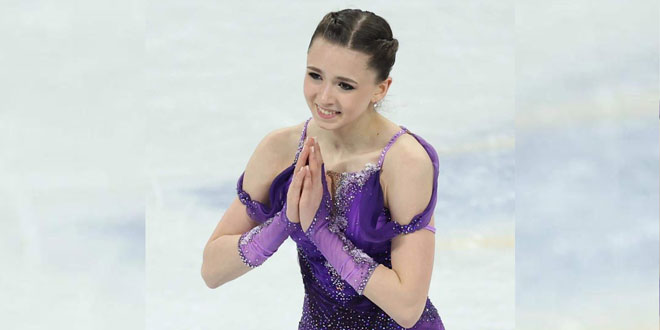
Russian figure skater Kamila Valieva’s right to compete in the women’s event at the Beijing Olympics will be decided at an urgent hearing at the Court of Arbitration for Sport.
The International Testing Agency (ITA)—on behalf of the International Olympic Committee (IOC)—said it would fight a decision by Russia’s anti-doping agency to allow the 15-year-old Valieva to skate. The Russian agency had provisionally banned Valieva because she failed a doping test in December.
Valieva is the heavy favorite in her event after setting world record scores this season and landing the first quad jump by a women at an Olympics.
The ITA confirmed that Valieva tested positive for the banned substance trimetazidine at the Russian national championships in St. Petersburg six weeks ago.
The positive test was flagged by a laboratory in Sweden a day after Valieva helped the Russians win the team event and just hours before the medal ceremony, which was then postponed. Whether the Russians will lose their gold medal in the team event will be decided later.
The legal handling of Valieva’s case started with an immediate interim ban from the Beijing Olympics imposed by the Russian agency, RUSADA, which oversaw testing at the national championships.
A RUSADA disciplinary panel upheld her appeal to overturn the skater’s interim ban.
The urgent hearing at CAS will only consider the question of the provisional ban at these games, said the ITA.
“The IOC will exercise its right to appeal and not to wait for the reasoned decision by RUSADA, because a decision is needed before the next competition the athlete is due to take part in,” the testing agency said.
Though Valieva is at the heart of the case, as a 15-year-old she has protections in the sports’ rule book—the World Anti-Doping Code. Under these guidelines she could ultimately receive just a simple reprimand.
When a minor is implicated in doping rules violations, the focus of the mandatory investigation turns to her entourage, such as coaches and team doctors.
The result of the Olympic team event is set to be a much longer-term legal process, likely preventing any medals being awarded in Beijing before the closing ceremony on Feb. 20
RUSADA will first investigate the full merits of the doping case and give a judgment. That verdict would lead to an appeal and also end up at CAS.
“The decision on the results of the ROC team in the Team Figure Skating event can be taken by the ISU only after a final decision on the full merits of the case has been taken,” the ITA said.
The latest doping case involving a Russian athlete could have broader implications for the country’s sports program.
Russia is competing in the Beijing Olympics as ROC, short for Russian Olympic Committee, without its anthem or flag. That’s because of the fallout from years of doping disputes including steroid use and cover-ups at the 2014 Winter Olympics, which Russia hosted.
The Russian Olympic Committee says it will fight to keep the figure skating gold medal won by a team that included Valieva.