 The Market Monitor Minding the Nation's Business
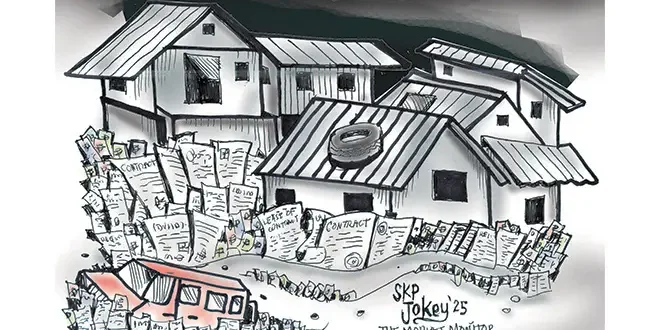
The ongoing crackdown on anomalous flood control projects (FCPs) has struck a national nerve, reaching a dramatic crescendo as President Ferdinand Marcos Jr. ordered the filing of graft charges against a contractor tied to a so-called “ghost” project in Bulacan. The President’s move came after personally inspecting another incomplete flood mitigation structure built with substandard materials—an ominous signal of how deeply embedded corruption is in public infrastructure development.
Senator Panfilo “Ping” Lacson’s explosive privilege speech before the Senate only intensified the scandal. His exposé detailed a billion-peso conspiracy involving lawmakers, Department of Public Works and Highways (DPWH) regional directors, favored contractors, and even Commission on Audit (COA) inspectors who brazenly certified non-existent or subpar work as compliant. The revelations painted a damning picture: the very institutions meant to safeguard public funds have been co-opted into the machinery of corruption.
Worse, when the Senate Blue Ribbon Committee began its inquiry, half of the contractors who were invited simply did not show up—a troubling display of impunity. Yet perhaps most unsettling of all is the meticulous effort to erase any paper trail. Senator Lacson named a sitting congressman and two former DPWH district engineers, claiming they deliberately left no documentation that could tie them to the crimes. This level of orchestration suggests a corruption scheme not merely tolerated, but professionally executed.
For residents affected by these failed flood control initiatives, the national spotlight may bring some measure of vindication. But it will not keep the waters at bay. The floods will continue because the projects meant to stop them are ineffective, incomplete, or entirely imaginary. And now, redoing these flawed efforts will require yet another round of public spending—essentially throwing good money after bad.
What we’re witnessing is not a simple case of negligence or bureaucratic red tape. This is systemic corruption enabled by an opaque and flawed budgeting process. As insiders and reform advocates have long lamented—though often silenced or ignored—the rot begins during the national budget deliberations. Lawmakers, under the guise of public service, routinely manipulate funding allocations in closed-door meetings. Surprise insertions, local pet projects, and padded line items make it easier for bad actors to syphon billions under the radar.
President Marcos Jr. may gain a temporary boost in public approval for ordering legal action, but optics cannot replace systemic reform. A few high-profile investigations and charges, while symbolically powerful, are meaningless if no one is ever actually held accountable. So far, despite the scale of the scandal, not a single major player has been jailed. Until there are convictions—real consequences—the culture of impunity will remain untouched.
The FCP debacle should be a wake-up call. If ghost projects and half-built flood control systems can so easily be passed off as legitimate—approved, funded and even “audited”—what else in our public infrastructure portfolio is fake or flawed? Roads that crumble months after completion? Bridges with rusting supports? Schools and hospitals that only exist on paper?
The Filipino people deserve better than this. They deserve a government that values transparency, accountability and competence. The FCPs are just the tip of the iceberg. Every major infrastructure project must be independently verified, with full public access to project documents, timelines, and contractor credentials. A central platform for whistleblowers should be institutionalized, with guaranteed protection and legal backing.
Ultimately, the real flood we face is one of corruption—overflowing, unchecked, and devastating. Unless the dam of accountability is firmly built and maintained, the country will continue to drown in the very projects meant to save it.