 The Market Monitor Minding the Nation's Business
By Luis Leoncio
A trade group estimates that some P904.6 bilion worth of products were smuggled into the country during the administration of former President Benigno Aquino III, specifically from 2011 to 2015.
The Federation of Philippine Industries’ (FPI) Fight Illicit Trade (IT) Movement commissioned the Center for Research and Communication Foundation Inc. (CRCFI) of the University of Asia and Pacific (UAP) to do a study that found that smuggling were rampant in certain industries, namely petroleum, steel, resins, wood, cigarettes, sugar, palm oil, and automotive batteries.
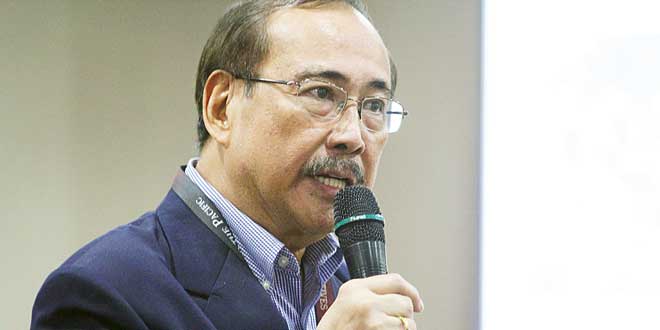
The value of smuggled goods was derived by computing the difference of the exports value from the host countries and the import value recorded in the Philippine Statistics Authority (PSA), according to University of Asia and the Pacific (UA&P) Prof. Rolando Dy.
The largest value of smuggling was recorded in the petroleum industry, amounting P680 billion, from 2013 to 2015.
This was followed by the steel industry, with smuggled goods valued at P106.1 billion; resin, P42.9 billion; palm oil, P30.9 billion; wood, P24.8 billion; cigarettes, P9.8 billion; sugar, P9.3 billion; and automotive battery, P750 million.
The impact and multiplier effects of the smuggled goods from the eight industries in five years resulted in P495.5 billion losses in the country’s gross domestic product (GDP), P1.1 trillion losses in gross output, P77.2 billion losses in household income, and 291,070 displaced workers.
“Smuggling weaves a vicious network of negative economic repercussions. Its devastating effects on government revenues and industries spawn vicious circles of economic problems,” the study said.
“Smuggling stirs up negative multiplier effects on gross domestic product, household income, and employment,” it added.
Dy noted that aside from these eight industries, smuggling was also rampant in imports of meat products and rice.
FPI Chairman Jesus Arranza said the Bureau of Customs (BOC) should publish all reference value to strengthen transparency, cut red tape, and fight smuggling.
The study also noted that the Customs Modernization and Tariff Act and the Anti-Agricultural Smuggling among other government issuances should be strictly implemented to deter illicit trade.
The implementation of these laws should be coupled with the presence of dynamic, progressive, and vigilant industry associations.
“There is a huge opportunity to plug leakages from illicit trade which can complement the tax reform efforts of the Duterte administration in its Build, Build, Build agenda,” Arranza said.
Finance Secretary Carlos Dominguez III, meanwhile, sought the support of local manufacturers to the Duterte administration’s Comprehensive Tax Reform Program (CTRP), which, he said, would be a potent tool to encourage enterprise and boost domestic market demand, attract investors and improve the purchasing power of wage earners, and build an inclusive econ
In a speech read for him by Finance Assistant Secretary Mark Dennis Joven, Dominguez also assured members of the FPI, which has long been partnering with the government in fighting smuggling, that the Department of Finance (DOF) will remain “relentless” in rebuilding the Bureau of Customs (BOC) so it can do a better job of weeding out official corruption, facilitating trade, and protecting both consumers and enterprises.
Dominguez commended the FPI led by Arranza for its anti-smuggling advocacy as such a sustained industry effort helps government shield consumers against substandard and hazardous products, guard enterprises from dumping and other unfair trade practices, and secure the country’s borders against illegal drugs.
“Clearly, much work still needs to be done to make this agency less vulnerable to corruption and more effective in its jobs of raising revenues for government. We intend to do the work that needs to be done,” he said before a gathering of FPI members.
Dominguez said the government will start improving tax administration at the BOC by purchasing x-ray machines to aid in the swift inspection of cargo and by hiring more Customs personnel to boost the agency’s technical capabilities and alter its corporate culture.
On top of these measures, Dominguez said the government will also review procedures for the valuation of goods passing through the country’s ports and explore the possibility of privatizing certain aspects of the BOC’s functions.
“I will assure you today that we will be relentless in rebuilding the Bureau of Customs. We will be untiring not only in fighting corruption in this agency but also in reinventing it so that it better facilitates trade while protecting our consumers and our enterprises,” Dominguez said.
“This will not be an easy task. I will rely on your ardent collaboration. The cooperation between the Department of Finance and the FPI has been fruitful. It will be more so in the coming months,” he added.
While sustaining the campaign versus smuggling, Dominguez said the Duterte administration is also implementing programs to industrialize the economy, which would entail a massive infrastructure buildup that would, in turn, be sustained by a robust and steady revenue stream sourced from the CTRP.
The CTRP, he said, “is not just about taxes, but also about increasing the purchasing power of wage earners and removing disincentives to foreign investors by way of lowering both personal and corporate income tax rates. “
Dominguez said that “by reshaping our tax policies, we are boosting domestic market demand while encouraging enterprise. Tax policy becomes a tool for building an inclusive economy.”
“I seek the support of you, our local manufacturers, to help get the tax reform package through. This is the key link in the chain of economic programs aimed at helping our economy sustain its robust growth,” Dominguez said.
He said the government is building an efficient logistics system by investing heavily in modernizing the country’s infrastructure, which would help develop a competitive industrial base and create more of the quality jobs that only the manufacturing sector can deliver.
Aside from investing in infrastructure, the government is also putting in place measures to drastically cut red tape, develop the country’s capital markets, and maintain fiscal stability to attract long-term direct investments and build an industrializing economy, Dominguez said.
He likewise said that the government is spending heavily on education and health to develop a young, highly skilled and competitive workforce.
The infra program, which would cost around P9 trillion over the next five years, will not only strengthen the country’s logistics backbone, but would also ensure its energy security over the long term, Dominguez said.
These initiatives are being implemented by the Duterte administration to realize its ultimate goal of maintaining a robust GDP growth rate of 7 percent so that the country can achieve upper middle – income status by 2022 and have a lower poverty rate of 14 percent by that time, Dominguez said.