 The Market Monitor Minding the Nation's Business
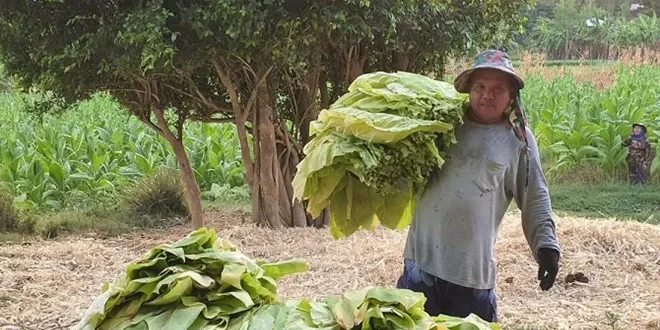
The booming illicit tobacco market is taking a heavy toll not only on government coffers but also on thousands of Filipino tobacco farmers who depend on legitimate businesses for their livelihood, industry experts warned.
Recent studies cited by the European Union-Association of Southeast Asian Nations Business Council (EU-ABC) and Euromonitor International showed that the Philippine government lost an estimated US$2.5 billion, or roughly ₱141 billion, in tax revenues over the last two years as illegal tobacco products continued to flood the market.
While the revenue losses are staggering, industry leaders said the damage extends far beyond taxes, affecting the welfare of farming communities that rely on the legal tobacco industry for support and long-term development.
“Legitimate producers maintain good relationships with tobacco farmers—looking after farmers and their communities and investing in them. However, illicit traders have no interest in maintaining those relationships the way legitimate producers do,” EU-ABC Executive Director Chris Humphrey pointed out.
Humphrey said the proliferation of illicit tobacco products creates an uneven playing field for legitimate businesses, siphoning away revenues that could otherwise be used to support farmers, generate jobs, and fund community programs.
The problem, he added, weakens the entire legal supply chain and limits the ability of responsible companies to continue investing in rural areas.
Euromonitor International Head of Consulting for Asia-Pacific Firdaus Muhammad echoed the concern, saying experiences in several countries indicate that illegal operators often take advantage of tobacco farmers.
“In some cases, tobacco farmers are being used in illicit operations. Illicit operators force tobacco farmers to sell their products at a lower price,” Muhammad asserted.
Although no Philippine-specific study has yet measured the exact impact of illicit tobacco on local farmers, Euromonitor noted that trends in other markets reveal how legally produced tobacco is often diverted into illegal channels, fueling the expansion of underground trade.
The Philippines has emerged as one of Southeast Asia’s most vulnerable markets for illicit tobacco products, particularly in the e-vapor segment. Studies show that more than 80 percent of e-vape products sold in the country are illicit, the highest incidence among ASEAN nations where vaping products are legally available.
The cigarette market is also facing significant challenges. Researchers estimate that one out of every four cigarette products sold in the Philippines comes from illegal sources, a rate considerably higher than the regional average.
Industry stakeholders are urging stronger enforcement measures to curb illicit trade, protect government revenues, and safeguard the livelihoods of Filipino tobacco farmers who continue to depend on the legal market for their survival. TRACY CABRERA