 The Market Monitor Minding the Nation's Business
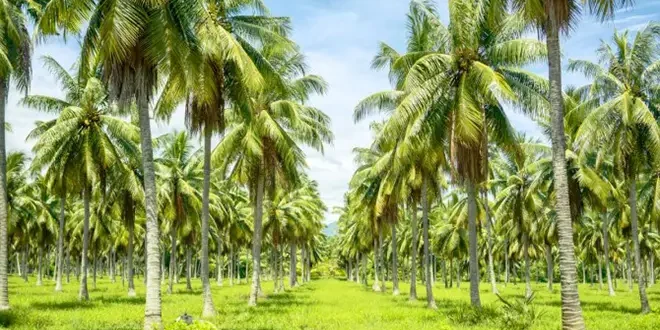
Despite the challenges being experienced by the coconut industry, Philippine coconut products continue to top the export market, which makes it more important for a massive coconut replanting program to ensure steady supply of coconut products in the export market.
And for this, President Marcos ordered the Philippine Coconut Authority to coordinate closely with the Cooperative Development Authority and consolidate farmers to ensure they enjoy massive funding for their replanting needs.
For 2025, the President approved an additional budget for the replanting and fertilization program of PCA, said the Presidential Communications Office in a Facebook post.
The additional fund of P1-billion would be used to implement the Philippine Coconut Industry Development Plan (PCIDP) from 2024 to 2034.
“President Ferdinand Marcos Jr. approved the additional budget for the massive coconut planting/replanting program and fertilization program for 2025 under the Philippine Coconut Industry Development Plan 2024 to 2034,” the PCO FB post said.
“The PCIDP 2024 to 2034 is in response to (President Marcos) directive to the [PCA] in October 2023 to make a detailed plan for the development of the country’s coconut industry,” it added.
The PCO also said PCA Administrator Dexter Buted welcomed the additional budget of P1 billion for the planting and replanting program of coconut trees, which would enable the PCA to plant 15.3 million trees in 2025.
Under the program, the PCA would plant and replant a total of 100 million coconut seedlings in 700,000 hectares of land by 2028 all over the country to increase coconut production by 4.7 billion, valued at P33.1 billion by 2034.
For this year, the PCA was eyeing to plant 8.5 million seedlings, 15.3 million seedlings in 2025 and 25.4 million every year from 2026 to 2028, reported the Manila Times recently.
“That’s why we still maintain our very high position in terms of coconut [product] exports because despite the fact that we have neglected the coconut industry over [numerous] years, I think, we’re [still] No. 1,” the President stressed.
“And despite the fact that we are really working with very limited raw [materials] because there has been no replanting, our trees are already old. That’s why this replanting is important,” he added.
The president noted a big market for coconut products, as he expected the private sector to buy all the supply “because the market is [very] large and growing” and the industry has not reached the market’s limit on coconut product demand.
The Department of Agriculture will adopt intercropping while farmers wait for the trees to produce nuts.
Among the crops that would be planted included coffee, cacao and bananas.
The 10-year PCIDP plan was developed to address the critical constraints of the low growth rate of the coconut industry in terms of production, low nut yield due to the aging coconut tree population, natural calamities, pests and diseases, poor farming and insufficient budget allocation, the Times added.
The PCA proposed a budget of P102.02 billion within 10 years to implement the plan. The budget would also be used to monitor and evaluate the programs, projects and activities.
Marcos expressed his intention to again make the Philippines the world’s No. 1 coconut exporter, seeing it as a “great opportunity” for the country’s continued economic growth.
The Philippine coconut industry contributed $3.22 billion to the country’s export earnings in 2022. The figure was 43 percent of the country’s total agricultural exports. (RDLC)