 The Market Monitor Minding the Nation's Business
By Tracy Cabrera
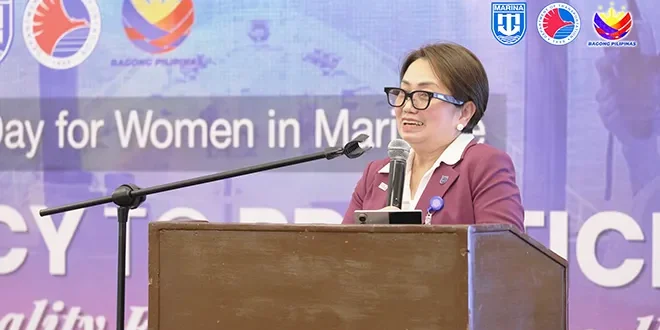
The Maritime Industry Authority (MARINA) is stepping up efforts to promote greater participation of women in the maritime sector, emphasizing that inclusivity is key to building a stronger and more competitive industry.
MARINA Administrator Sonia Malaluan said the continued expansion of global maritime trade is opening up more opportunities not only at sea but also in related fields such as port operations, logistics, shipbuilding, maritime safety, and governance.
She noted, however, that women remain significantly underrepresented despite the sector’s growth potential.
“The industry is expanding and offers vast opportunities to attract new talent and reshape its future, yet women still make up only a small portion of the available workforce,” Malaluan said.
Citing the 2024 Women in Maritime Survey conducted by the International Maritime Organization (IMO) and the Women’s International Shipping & Trading Association (WISTA), MARINA said women account for just under 19 percent of the global maritime workforce surveyed.
In the Philippines, the gap is even more pronounced, with women representing only 8.71 percent—or about 76,040—of the country’s certificated seafaring workforce.
The issue was highlighted during the observance of the International Day for Women in Maritime last May 18, underscoring the need for stronger collaboration among governments, industry stakeholders, academic institutions, and regulatory bodies to promote gender equality in the sector.
Malaluan also pointed to international efforts supporting inclusion, including initiatives from Belgium, where officials acknowledged the underrepresentation of women in maritime professions and launched programs aimed at increasing awareness and participation.
One such initiative, Project Olivia, has helped raise interest among female students, increase visibility of women in maritime careers, and strengthen partnerships between schools and industry players.
The Philippines has also launched its own initiative, the “She-to-Sea” campaign led by Women in Maritime Philippines (WIMaPhil) in cooperation with MARINA and the IMO. The program seeks to expand access for women in maritime education, leadership roles, technical professions, and policymaking, while also addressing workplace culture and safety concerns.
Malaluan stressed that empowering women goes beyond representation, calling it a long-term investment in the industry’s future.
She added that women are already contributing significantly in areas such as environmental management, port sustainability, maritime education, research, and governance.
She concluded that increasing visibility of women in maritime careers is crucial, as it helps inspire more young women to see the sector as an accessible and viable path.