 The Market Monitor Minding the Nation's Business
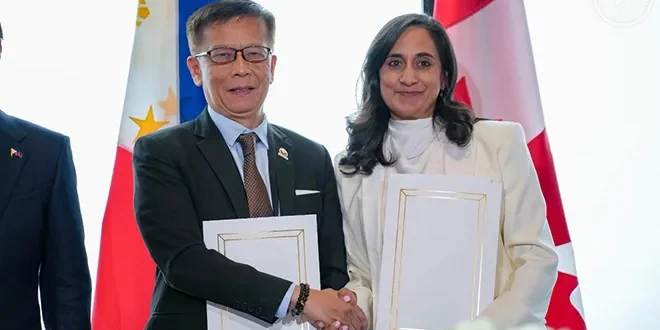
The Philippines and Canada have signed their first federal-level bilateral labor and migration agreement, marking a major step toward strengthening protections for overseas Filipino workers (OFWs) through fair recruitment practices and closer government collaboration.
The Joint Declaration of Intent (JDI) on Labor and Migration Cooperation was signed on Thursday in Vancouver by Migrant Workers Secretary Hans Leo Cacdac and Canadian Foreign Minister Anita Indira Anand during President Ferdinand R. Marcos Jr.’s working visit to Canada at the invitation of Prime Minister Mark Carney.
President Marcos and Carney witnessed the signing of the agreement, which establishes a common federal framework to guide labor migration between the two countries.
“This is the first-ever federal bilateral agreement on labor and migration with Canada,” Cacdac said in a statement released Friday.
He said the agreement reflects the Marcos administration’s continuing efforts to strengthen international labor partnerships while promoting ethical recruitment and protecting the welfare of Filipino workers abroad.
“In line with the directive of President Ferdinand R. Marcos Jr., we continue to expand and elevate our labor cooperation by affirming our shared values on fair and ethical recruitment,” Cacdac said.
Canadian Prime Minister Carney also underscored the significance of the declaration, describing it as the first bilateral labor and migration agreement of its kind entered into by Canada’s federal government.
Cacdac said the accord goes beyond a diplomatic commitment, calling it “a concrete step toward making overseas employment safer, fairer, and more accessible for Filipino workers and their families.”
While the Philippines already maintains labor cooperation agreements with several Canadian provinces, he noted that the new declaration is the first to establish a shared labor migration framework directly with Canada’s federal government.
Under the agreement, both countries committed to promoting fair and ethical recruitment and employment practices, including the principle that workers and job seekers should not shoulder recruitment fees and other related employment costs that are the responsibility of employers.
The declaration also seeks to improve migrant workers’ access to information about their rights, including available grievance and complaint mechanisms, while reinforcing cooperation to ensure that the recruitment and deployment of Filipino workers comply with the laws and regulations of both countries.