 The Market Monitor Minding the Nation's Business

THE Philippines’ high exposure to inflation risks could prompt the central bank to tighten its monetary policy further despite its weak growth prospects, Oxford Economics said.
In a report dated Aug. 11, the United Kingdom-based think tank said the Bangko Sentral ng Pilipinas could still deliver an additional 50 basis points (bps) in rate hikes to 5.25% this year.
This comes even as they see most central banks in emerging markets pausing amid the continuing war in West Asia.
“We expect most central banks will keep rates on hold as uncertainty regarding the Middle East conflict lingers,” Oxford Economics Lead Economist Maya Senussi said. “We only forecast additional hikes in the Czech Republic, India, Indonesia, the Philippines, and South Africa.”
According to Ms. Senussi, the country’s vulnerability to price shocks warrants a higher-for-longer policy even as its growth outlook looks bleak.
“The Philippines remains the most exposed to inflation risks and we expect another cumulative 50 bps worth of tightening despite soft growth prospects,” she said.
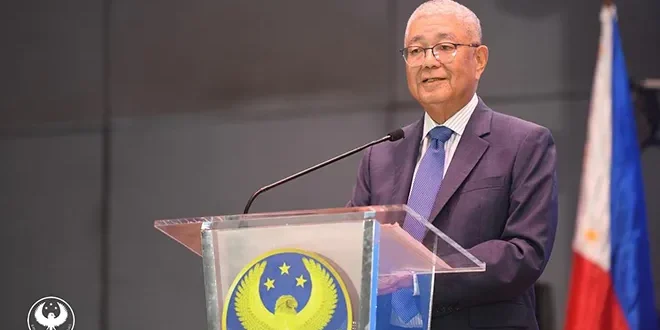
BSP Governor Eli M. Remolona, Jr. has said that the economy continues to suffer from a negative output gap especially after domestic growth slowed for a fourth straight quarter.
An economy posts a negative output gap when its actual output is less than its full potential.
In the second quarter, Philippine GDP grew by 2.3% — its lowest since the pandemic. This came as investments took a major hit from the decline in public construction, while household spending suffered from the sharp rise in consumer prices.
The country’s unemployment rate climbed to a three-month high of 4.9% in June from 3.7% a year earlier, translating to 2.59 million jobless Filipinos. The unemployment rate averaged 5% in the first half.
Oxford Economics said the uptick in exports was still insufficient to boost the economy’s overall growth during the period.
As of June, the country’s total exports grew by 13.09% year on year to $46.72 billion from $41.31 billion. This is projected to rise by 3% for the full year, based on the Development Budget Coordination Committee’s latest outlook.
For Citi economists, the economy could rebound in the third quarter as inflation continues to cool down, investment growth turns around, and exports growth remains at a double-digit pace.
However, it ruled out a sharp recovery, noting that risks could emerge if remittance inflows from the Middle East stay subdued, and the upcoming El Niño event triggers another price shock.
The central bank has also remained optimistic about the economy’s second-half outlook, counting on the government’s catch-up measures to lift growth in the latter part of the year.
Citi kept its full-year GDP growth forecast for the Philippines at 3.2%, below the government’s 3.5%-4.5% target.