 The Market Monitor Minding the Nation's Business
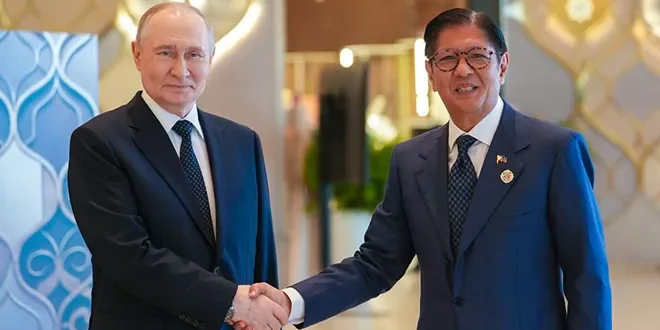
President Ferdinand R. Marcos Jr. on Thursday said the Philippines is working to strengthen energy security by developing a framework that would formalize its oil supply arrangement with Russia, as global fuel markets continue to face volatility driven by geopolitical tensions.
Speaking to reporters in Kazan, Marcos clarified that no formal contracts have been signed between Manila and Moscow, but both sides have agreed to institutionalize cooperation to ensure more stable and predictable energy supply flows.
He said the current setup remains largely “ad hoc,” with Russian oil being imported by the Philippines only on a needs basis in response to supply pressures.
“In terms of energy, there have been no firm agreements, but merely an understanding that we will continue to develop what we had already started as a response to the oil crisis that was the effect of the war in the Middle East, which we are hoping will come to an end soon,” Marcos said.
He added that even if tensions in the Middle East ease, the Philippines intends to continue expanding its pool of energy partners beyond traditional sources.
“But, nonetheless, even if the war does come to an end, we, the Philippines, will still continue to look for so-called non-traditional partners in terms of the supply of petroleum products,” he said.
Marcos emphasized that diversifying suppliers is essential to ensuring long-term energy stability, describing Russia as a viable alternative source of petroleum products.
The President said the Philippines is “very open” to importing oil from Russia, noting that it would provide the country with “another assured lifeline when it comes to petroleum products.”
He added that formalizing the arrangement would give Manila greater flexibility and security in managing fuel supply needs.
“This is yet to be decided. There are many complications to that. It is not that simple,” Marcos said. “There are, of course, political considerations – geopolitical considerations. But when two parties are determined to make it work, I’m always very confident that it will work and we will find a way around those challenges and those complications so that we make it a reality.”
The statement comes months after a vessel carrying more than 700,000 barrels of Russian crude oil arrived in the Philippines in March, following the government’s declaration of a national energy emergency triggered by disruptions linked to the Middle East conflict.