 The Market Monitor Minding the Nation's Business
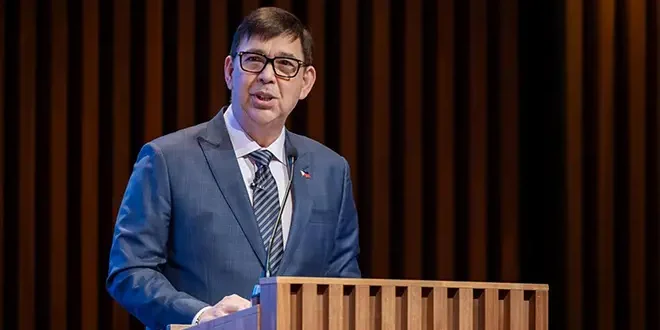
Finance Secretary Ralph Recto highlighted the Philippines’ comprehensive climate finance strategies during the 29th Conference of the Parties to the United Nations Framework Convention on Climate Change (COP29) in Baku, Azerbaijan.
Recto urged global leaders to seize the opportunity to advance meaningful climate action, emphasizing the urgency of the moment.
“This year’s COP must go beyond rhetoric. For the Philippines, we are fortunate to have a President who is our foremost champion for climate action, inspiring every Filipino to rally for our planet’s survival,” Recto said in a video address to the Philippine Pavilion event on November 14.
He emphasized that under President Ferdinand R. Marcos Jr.’s leadership, the Philippine Development Plan has placed rapid economic growth and climate resilience at its core, with all government agencies mobilized to realize this dual goal.
Themed “In Solidarity for a Green World,” COP29 convened governments, organizations, and stakeholders to tackle climate challenges and promote sustainable development. Dubbed the “Finance COP,” the conference aims to finalize the New Collective Quantified Goal (NCQG), a global climate finance framework to address the financial needs of developing countries post-2025.
The Philippine Pavilion provided a platform to showcase the nation’s proactive climate actions and foster partnerships for a sustainable future. During the session “Playbook for Climate Finance: Climate, Nature, and Community at the Core,” moderated by the United Nations Development Programme, Recto underscored the Department of Finance’s (DOF) pivotal role in balancing economic growth with climate action.
“These two priorities—economic development and climate resilience—are not opposing forces. When harmonized within our national context, they ensure the security, welfare, and prosperity of our people,” Recto stated.
Recto outlined the government’s key strategies, including the Medium-Term Fiscal Program, which ensures sustainable economic growth while maintaining fiscal discipline. This framework enables investments in green infrastructure, community adaptation projects, climate education, and poverty alleviation.
The Philippines also leverages its National Adaptation Plan (NAP) and Nationally Determined Contribution Implementation Plan (NDCIP) as roadmaps for achieving climate resilience and economic growth. The NAP focuses on long-term adaptation planning, while the NDCIP details actionable steps to meet the nation’s climate goals, integrating adaptation benefits.
Recto spotlighted the People’s Survival Fund, a program supporting community-led climate adaptation projects. Additionally, the Bureau of the Treasury’s National Indemnity Insurance Program protects national assets and provides economic security against disasters.
The Philippines has also secured standby credit lines with development partners and was the first to sign the World Bank’s Rapid Response Option (RRO) agreement, a model now adopted by 25 nations. The RRO facilitates swift resource deployment during crises.
To drive green investments, the Green Force, co-chaired by the DOF and the Climate Change Commission, accelerates sustainable finance initiatives. The recently enacted Public-Private Partnership (PPP) Code enhances private sector collaboration for climate-resilient projects.
“We are proud to be among the first countries to mandate environmental, social, and governance (ESG) standards and promote gender inclusivity in PPPs. For us, progress must be swift, sustainable, impactful, and inclusive,” Recto said.
The government’s fiscal policies incentivize clean energy, green infrastructure, sustainable agriculture, and waste-to-energy technologies. Upcoming legislation, such as the proposed excise tax on single-use plastics, aims to curb pollution and encourage sustainable practices.
Recto also highlighted the success of sustainability bonds issued by both the public and private sectors to fund green and social projects, aligning with the nation’s commitment to the Sustainable Development Goals.
The Philippines’ successful bid to host the Loss and Damage Fund Board was noted as a milestone in improving climate finance access for Asia-Pacific economies.
Recto emphasized that while the Philippines is making significant strides, it seeks to learn from global best practices to strengthen integrated solutions for climate action and poverty eradication.
“We are acutely aware that as climate impacts intensify, so too does the challenge of eliminating poverty. Building a climate-proof nation is a long journey, but by uniting our collective strengths, we can achieve meaningful progress,” he concluded.