 The Market Monitor Minding the Nation's Business

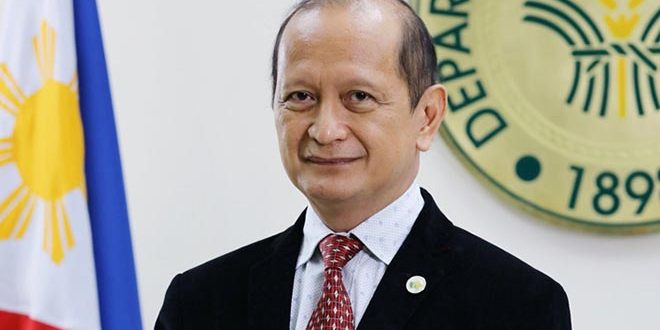

Agriculture Undersecretary for Rice Industry Development Leocadio S. Sebastian’s greatest contribution to the flourishing rice industry of Vietnam through the Smart MAP, which help them plan ahead the planting and harvesting of rice against salt intrusion from the Mekong River and climate change was recently feted by a Vietnamese newspaper following his recent visit to Hau Giang for the Vietnam Hau Giang Rice Festival 2023 last December 12 to 15.
The paper said the Mekong Delta locations use the Climate Smart MAP (CS-MAP) tool directs rice production based on annual climate forecasts and early season forecasts.
Sebastian attended the festival and spoke last December 13 for the Conference on Vietnam Rice Value Chain Development: Responsibility and Sustainability in Hau Giang to visit Hau Guang and the Mekong Delta region.
Sebastian worked six years in Vietnam as chief representative of the International Rice Research Institute and as consultant of the Ministry of Agriculture and Rural Development (MARD).
Sebastian recalled that during his six years of cooperation with MARD, Vietnam’s promotion of rice exports will put pressure on production. Therefore, managers need to provide a clear roadmap to ensure sustainability, not harm the environment, and balance the market economy.
” Ten years ago, when I came to Vietnam, I talked with Former Deputy Minister Le Quoc Doanh about how to develop the rice industry and increase the competitiveness of Vietnamese rice. Up to now, you have come a very long way with many achievements. Farmers, like me, find that they are very satisfied with rice farming. Rice prices have increased, productivity and quality are good,” the paper quoted him.
The Philippines is also trying to change to develop a more suitable rice production chain. Vietnam is a rice-exporting country. The Philippines imports about 15% each year, so the two countries have many opportunities to cooperate with each other, Sebastian said.
“I realize that many farmers will not cultivate rice more intensively but will shift production towards producing rice with high quality, high value, and sustainable production. With the achievements of developed agriculture, Vietnam has many conditions to share and help other countries,” he added.
Vietnam’s sharing and helping other countries develop rice production not only helps Vietnam but also helps everyone. Currently, countries are orienting production development in a green and sustainable direction, which is a necessary and correct path. We must change production methods to suit the changes in the specific context. In addition, we need to have comprehensive connectivity in the region,”Sebastian emphasized.
Rice is a traditional and important production industry in Vietnam, creating livelihoods for tens of millions of farmers across the country. In recent years, Vietnam has achieved many great achievements in rice production, making an important contribution to ensuring national food security and currently maintaining its position as one of the world’s leading rice exporters with constantly increasing export turnover…
Amid such strides, Vietnam’s rice industry still faces many difficulties and problems, especially in the current context with fluctuations in the world market, changes in consumer tastes, and Climate Change.
New challenges require the rice industry to adapt to improve rice quality, reduce input costs, adapt to climate change, reduce greenhouse gas emissions, and ensure national food security. Join and expand consumption markets, moving towards building a sustainable rice brand in the international market.
International guests see the openness of Vietnam through thematic seminars within the framework of the Festival in Hau Giang. As a leading country in rice production, Vietnam is responsible for sharing expertise, knowledge, and stories about the perseverance of scientists, the paper noted.
As Minister Le Minh Hoan said at the kick-off ceremony of Vietnam-Hau Giang International Rice Festival 2023 on December 12, “currently facing the challenges of climate change, market fluctuations and shifting consumer trends, the rice industry value chain needs flexible adaptations to become professional and sustainable. Not only creating high-quality products but also contributing to creating a stable and peaceful ecosystem.