 The Market Monitor Minding the Nation's Business

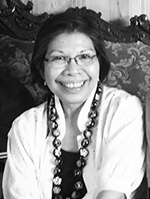 Alegria A.Imperial / Peregrine Notes
Somehow, in this household I once knew, the pall has dissipated. That about which seemed unspoken has been unraveled. The frayed ends that dangled have been tied into narratives though once in a while, if brushed by a breath, still prompts sobbing which arises from the teenager’s breast of grandmother, now almost 90 years old. Of her siblings who hold images of that vivid morning, when all nine of them became orphans, only she remains—with the rest having passed on, and those still alive quite young then, surviving on mere second-hand memories.
The absence of a father taken away at breakfast in a remote barrio hedged in by banana groves darkly towered in the silence. In what sounded like tales in the retelling, the family had evacuated from a well-appointed house in Laoag, the capital town, shortly after the bombing of Pearl Harbor. Long after, as if from another life, the eldest daughter would recall in snatches, a wall lined by The Classics, a Victrola by a window where they listened to Chopin and Beethoven, dinners after a trip to the commissary with Blue Ribbon butter and tin boxes of Jacobs crackers. Bundled in a hurry, the youngest, barely a year old, none of that could be scuttled along.
Apparently like most big families left homeless but especially fatherless, with a mother who hasn’t worked a single day of her life, the children had to be partitioned like rice-cake wedges to relatives; others had closed their doors at their size. Before the applied-for benefits started, they moved to more borrowed homes—in one of them the size of a cottage, they huddled to cheer the birth of the first grandchild.
The event, though, lined the family in a parallel of opposites: her mother, then the only breadwinner, had added another member to be cared for, yet what joy the baby proved each day.
Still, the hush persisted and the shadow of the absentee figure continued to loom. I finally learned his name and soldier-rank inscribed in a saber that a younger son, who barely knew him, would draw to polish once in a while; I wonder if he used it in his high-school PMT (preparatory military training or what is now known as CAT or citizen army training). During those stray Siberian Decembers, the widow would warm me with a blanket with US Army markings that strangely smelled of oil and felt scratchy. Already an adult by the time a portrait this US Army lieutenant surfaced, I stared, seeing in him another son, who bore his square jaw, aquiline profile and powerful stance, but which he frittered away in an unexpressed or unrecognized emptiness that did not cease to gnaw at him in silence. The eldest son drowned that pain, expecting perhaps that in stupor, his father would somehow return.
Both sons who last saw their father, died mum about him. The elder son is said to have waved back to him from an open truck of war prisoners; the other next to him at birth, walked miles with his grandmother to his prison cell at the Provincial Capitol in Laoag for a visit, only to be handed hi-rolled-up mat and blanket, where he had folded in Thomas a Kempis’s “Imitation of Christ.” He was rumored to have been executed somewhere along the riverbank but no corpus ever came up.
Days before, during her visits, the eldest daughter is known to have pleaded with him for his family the military secrets he wouldn’t reveal to the Japanese, even if tortured. At his alleged execution, this daughter had to seek the parish priest for succor on her faith endangered of melting. She had struggled to keep it strong, as she watched their life turn more and more unreal. Growing up with her, I never saw her cry nor did I hear anything about her father. Her husband, who had thought this absentee soldier deserved to be declared a hero, had to goad her to finally tell his story. The silence had to be broken.
Silence, according to volumes that have been written, along with collected memoirs, apparently characterizes how grief petrifies survivors such those of Manila in its month-long bombing from February 3, 1945. While the horror cannot possibly be documented, more footages, pictures, and narratives have since been gathered, now in Lucky Guillermo’s and Peter Parson’s “Manila 1945: The Rest of the Story” to be launched with a documentary on February 5. In the book Lost in the Victory: Reflections of American War Orphans of World War II, edited by Calvin L. Christman, also authored from interviews by Susan Johnson Hadler and Ann Bennett Mix, who like the family I knew, lost their father at the end of WWII, silence swarmed also among countless families as widows dealt with grief and survival.
Perhaps, the pain later takes on the guise of memories; yet again, how much of it could really be told? At the installation of Ceferino R. Acosta’s bust for a monument in Bacarra, Ilocos Norte, for instance, a never-been mentioned detail again burst the thin membrane of forgetting: when the youngest son took the podium for a response, someone in the audience said what his children must have known but simply kept in their hearts: “he sounds exactly like him!” Ahhh…so he has not been silent all these years, after all.