 The Market Monitor Minding the Nation's Business
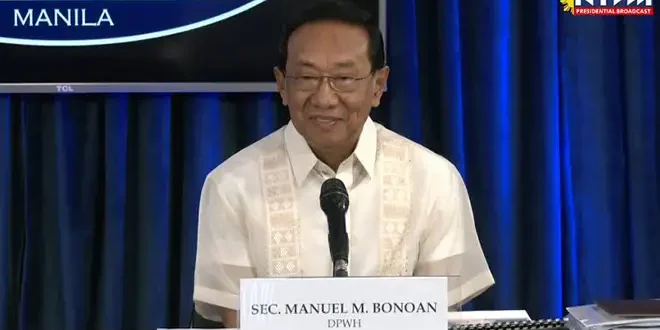
The Department of Public Works and Highways (DPWH) is shifting its focus to high-impact infrastructure efforts, including the rehabilitation of Epifanio Delos Santos Avenue (EDSA) and the construction of a longer, parallel bridge to the aging San Juanico Bridge, which has been flagged for structural issues.
In preparation for the 2026 ASEAN Summit, DPWH Secretary Manuel Manligas Bonoan announced during a Malacañang press briefing that the rehabilitation of EDSA—specifically the segment from Pasay City to Shaw Boulevard—will begin soon, aimed at easing congestion and facilitating traffic flow during the international event.
“Ang timetable po namin dito is we hope that we can complete those segments, iyong segments na iyan, towards the end of the year,” Bonoan stated. The project will be done in phases to minimize disruption, with other portions possibly undergoing repair as long as they don’t interfere with summit-related traffic.
“Ang plano po namin dito, while we’re going to put priority to those sections from Pasay to Shaw Boulevard, then maybe other sections that we may start also na hindi naman masyadong makakaabala doon sa traffic during the summit in Manila,” he added.
Meanwhile, after engineers uncovered structural flaws in the San Juanico Bridge, which links Samar and Leyte, the DPWH confirmed plans to build a new 2.6-kilometer bridge parallel to the existing one. Bonoan explained that the new bridge will be a flagship project of the Marcos administration and will be financed by the Japanese government.
“The new bridge is now under preparation. In fact, this will be one of the flagship projects under this administration and ito po ay mapi-finance ng Japanese government,” he said. The bridge is currently undergoing detailed engineering design, targeted for completion by 2026, with construction to begin immediately afterward.
Built in 1969 under the late President Ferdinand Marcos Sr., the original San Juanico Bridge spans 2.16 km and remains a crucial transportation link in Eastern Visayas. Due to safety concerns, the DPWH has imposed a three-ton weight limit and initiated immediate retrofitting on compromised segments.
“We are expediting the process. In the meantime, nakipag-coordinate po kami with the local governments, the Philippine Ports Authority (PPA) and doon sa PNP for the control of traffic,” Bonoan shared.
For now, passengers must disembark on one end of the bridge and transfer to a shuttle service provided by the same bus operator on the other end—free of charge. The DPWH is also working with the PPA to identify alternate routes from Luzon to Leyte.
Bonoan added that once critical retrofitting is done, the bridge’s load capacity might be raised to 10 tons by late 2025. “In the meantime, we are doing our best na kung matapos po namin kumpunihin ‘yung deteriorated sections doon sa approaches, we might be able to increase the load limit sometime within the year,” he concluded. TRACY CABRERA