 The Market Monitor Minding the Nation's Business
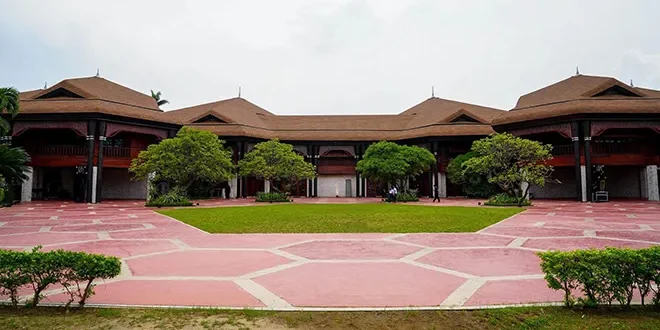
After six months of restoration, the Coconut Palace recently opened in time for the Philippine hosting of the ASEAN Summit in November.
The Coconut Palace – regarded today as a cultural icon – was commissioned by then-First Lady Imelda Marcos in 1978 using the design of National Artist for Architecture, Francisco “Bobby” Mañosa.
Restoration began in February 2026 and unveiled last Aug. 25.
Restoration was coordinated with the National Commission for Culture and the Arts. The structure mainly uses local materials such as coconut lumber, coconut shells, capiz shells and various types of Philippine hardwood.
“We deemed it our responsibility to preserve the value of this asset because of its cultural heritage,” said Joseph Andres, executive vice-president for research, innovation, and strategic advisory of the Government Service Insurance System (GSIS), which owns the property.
Citing “natural wear and tear on the majority-wooden structure,” he noted that its proximity to Manila Bay’s salty air contributed to the Coconut Palace’s deterioration over the years.
“The overall restoration amounted to around P200 million for the entire six-month duration,” he added.
Set to be one of the venues for the ASEAN Summit in 2026, upgrades included air-conditioning for visitors. Main goal of the restoration was to bring back how the structure originally looked, said Andres.
He said GSIS hoped to open it to the public by 2027, so that they can “enjoy the grandeur and excellence of Filipino artistry.” Up to last year, it was still welcoming sporadic visits from the public despite already being in a state of disrepair.
“We plan to hire a property manager to handle this important cultural asset,” he said. “The coconut is the tree of life, and the Coconut Palace is a symbol of Filipino ingenuity and craftsmanship.”
Features that set the structure apart are the hexagonal design motif, inspired by the shape of a husked coconut, from the floor to the ceiling. Chandeliers are made of Capizshells, and the walls are lined with artworks from the GSIS’ extensive art collection.
Aside from the interiors made of polished coconut lumber, furniture is also all-original, featuring materials like solihiya (woven rattan). The library, which was used as the office of former Vice-President Jejomar Binay from 2011 to 2016, contains books on Philippine history, culture and the arts, displays of Philippine maps, and craftwork ranging from woven baskets to metal containers to coconut shell centerpieces.
The Coconut Palace is also known for its seven guest rooms, each named after a Philippine location: Bicol, Marawi, Pampanga, Zamboanga, Mountain Province, Iloilo, and Ilocos. The rooms show various artifacts, art, and attributes of each place they were named after.
The dining room has a 37-foot-long table that can seat 24 guests. Its tabletop is made of laminated coconut shells. The wooden chandeliers above are inspired by the carrozas or carriages used in Holy Week processions carrying religious images, while the walls display a collection of ceramics and celadon.
GSIS targets to open the Coconut Palace to the public early 2027.