 The Market Monitor Minding the Nation's Business
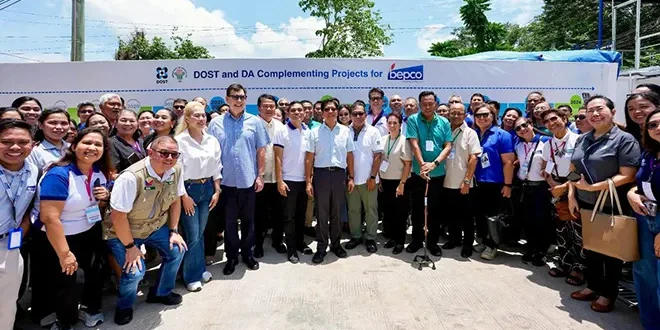
President Ferdinand R. Marcos Jr. has vowed to further cut the grip of middlemen on the country’s agricultural supply chain, saying farmers and producers should capture more value from what they grow and produce.
Marcos made the commitment during his visit to the Batangas Egg Producers Multipurpose Cooperative (BEPCO), where he inspected the cooperative’s ₱300-million egg processing facility in Barangay Don Luis, San Jose, a major egg-producing area in the country.
Accompanied by Agriculture Secretary Francisco Tiu Laurel, the President highlighted the role of government agencies in helping farmers move beyond selling raw agricultural products and into processing and value-added production.
“That is again something very important because it’s good for the environment and even equally important, the value added that comes from the processing,” Marcos said.
He said the initiative reflects the government’s continuing push to shorten the distance between producers and consumers by reducing layers in the supply chain.
“This is the continuing effort of the government to cut out the middleman from between the farmer, between the producer, and the market,” he added.
BEPCO’s facility is designed to process part of the estimated seven million to 10 million eggs produced daily, depending on the season. Instead of allowing excess or unsold eggs to go to waste, the cooperative can convert them into longer-lasting products such as liquid and pasteurized eggs.
The Department of Science and Technology (DOST) developed the processing technology, while the Department of Agriculture (DA) provided machinery and assistance in establishing egg collection and processing systems.
Marcos also cited the project as a model for maximizing agricultural resources while reducing waste.
“Not only this is a good example of what can be done when many agencies of government are working together, working hand-in-hand, but also when we develop the proper technology, how we can in fact put up what is referred to as a circular business,” he said.
The processing line can handle up to 1,400 kilos of liquid egg per hour, equivalent to about 28,000 50-gram eggs. Products undergo quality-control procedures, including microbiological testing for Salmonella, before labeling and distribution.
The DA also provided a ₱50-million grant for a three-story cold storage facility capable of holding up to 80 tons of finished products, helping extend their market life.
BEPCO’s spray-drying operation further transforms liquid eggs into powdered egg white, yolk, and whole egg, allowing the products to remain usable for as long as two years.
Marcos said the project is still in its pilot stage, with additional machinery being installed to expand its production capacity.
For the government, the broader objective goes beyond eggs: helping agricultural producers earn more by processing their products, reducing wastage, and bringing them closer to the market without relying as heavily on intermediaries.