 The Market Monitor Minding the Nation's Business
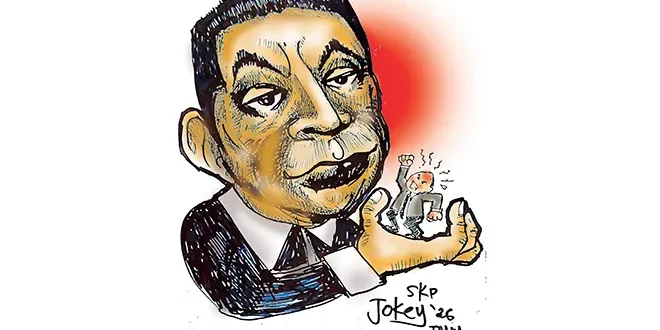
Chinese Ambassador Jing Quan has become a convenient symbol of everything Filipinos resent about Beijing’s increasingly aggressive conduct in the West Philippine Sea. Defense Secretary Gilbert “Gibo” Teodoro has been the country’s staunch defender of Philippine sovereignty, exchanging of direct accusations. But declaring the ambassador persona non grata would accomplish little beyond satisfying public anger.
It would not stop Chinese vessels from harassing Filipino fishermen, obstructing Philippine Coast Guard operations or challenging the country’s maritime rights.
Jing Quan’s controversial statements may have been undiplomatic, but speaking bluntly about the Philippines’ military disadvantage against China is not necessarily provocation. The uncomfortable reality is that the Philippines cannot match China’s military capabilities in a direct confrontation. Pretending otherwise through patriotic declarations does not make the country safer.
The increasingly hostile exchanges between Chinese diplomats and Philippine legislators have only aggravated the situation. Diplomacy is supposed to manage disagreements, not turn every disagreement into a contest of national pride. Imagine the consequences if a Chinese ambassador publicly engaged Donald Trump in the same manner. The resulting confrontation could quickly extend beyond diplomatic rhetoric.
China’s disputes with its neighbors are hardly confined to Southeast Asia. Its conduct in the South China Sea has generated international concern, particularly over its expansive maritime claims and disregard for the Philippines’ rights under international law.
Yet, Beijing has an effective counterstrategy: reverse the narrative.
China portrays the Philippines as the provocateur, allegedly encouraged by Washington to destabilize the region. This message finds amplification through online commentators and influencers who promote Beijing-friendly narratives, sometimes obscuring the underlying maritime disputes.
Meanwhile, the Philippine Coast Guard and Armed Forces of the Philippines continue projecting determination, knowing that a serious military confrontation would expose the country’s capability gap. Ultimately, the United States remains a crucial security partner, although Philippine defense planning cannot depend exclusively on American intervention.
Beijing understands this vulnerability.
China’s long-term strategy appears less concerned with winning every diplomatic argument than with preserving its strategic position while the international order undergoes turbulence. Friends and rivals may change, but national interests remain paramount.
The Philippines must adopt the same realism.
National pride is important, but it cannot replace military preparedness, economic resilience and carefully managed diplomacy. Expelling an ambassador might generate applause at home, yet leave the underlying problem untouched.
The objective is not to defeat China in a war of words. It is to protect Philippine sovereignty without stumbling into a war the country cannot afford. That requires firmness without recklessness, alliances without dependency, and diplomacy without illusions about Beijing’s intentions.