 The Market Monitor Minding the Nation's Business
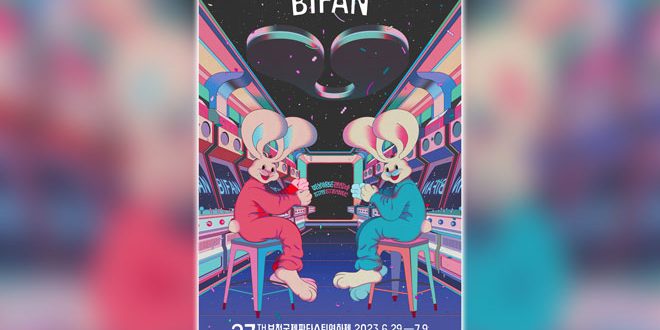

BiFan is the acronym of Bucheon International Fantastic Film Festival in Bucheon City, South Korea.
In the early 2010s, it used to be called Puchon International Fantastic Film Festival or PiFan, Puchon being another name for Bucheon in the Korean historical, geographical and territorial layout.
I first heard of PiFan from my Korean mentor Cho Pock-rey, arts ambassador, film professor, programmer at the Gwangju International Film Festival, still in Korea, and some other official and important functions.
Cho was one of the jurors at the 2010 ASEAN Documentary Filmmaking Festival held in Hanoi, Vietnam.
My entry to the contest was “Dumagat,” a short film on the indigenous peoples of Infanta, Real and General Nakar, Quezon known as Dumagat (or by the sea). Pock-rey liked my doc film very much although she said that some of her colleagues in the jury weren’t impressed with my work. Eventually, it won a consolation prize during the awards night.
We stayed in Hanoi for five days and I had the chance to interact with filmmakers from Asia—Thailand, Myanmar, Malaysia, Indonesia, Cambodia, Laos, Vietnam and Brunei Darussalam.
From there on, Cho was always in touch.
One day, she sent me a message through Facebook that I should look for PiFan on the Internet. So I mapped out all international film festivals and finally found PiFan. I looked closely on its website.
There was a component of PiFan that I was qualified to join. That was the Network of Asian Fantastic Films (NAFF) where it had a Fantastic Film School (FFS) where students were trained to produce, direct, write, organize etc. a film in the genre form—meaning fantasy, horror, thriller, sci-fi and other supernatural stylistics. I applied and successfully accepted. I was the very first Filipino to be admitted to the institute no matter crash course but concise, experiential and comprehensive. I’ve got to learn more about genre filmmaking and the things that are related to it.
My classmates were mostly from Asian nations like Korea, Singapore, Hong Kong and Taiwan.
Some of my mentors were renowned film producers, creatives, directors, professors, media practitioners, entertainment press and other stakeholders like Jonathan Kim, producer of the Korean box-office hit “My Sassy Girl”; Patrick Frater, international entertainment journalist; Therry Wase-Bailey, Managing Director and Head of Sales, Celsius Entertainment, Inc.; Hollywood film producer Mike Macari; film distributor and producer Tim Kwok; Kay Heeyoung Kim, Executive Producer, Marketing and Strategy, Macrograph, Inc.; Hong Sungkee, lawyer; Choi Miae, CEO (Chief Executive Officer), Treefilm; David Kaplan, director, producer and writer from New York City and John Heinsen, multi-platform storyteller and owner of Bunnygraph Production Company.
It was Jongsuk Thomas Nam, NAFF Senior Manager and now Managing Director and BiFan Programmer of English-speaking countries’ cinema who was very accommodating of my presence in the school.
I was in Puchon for seven days where I was feted with hotel accommodation, gala premieres, showing of international films, opening of various activities like the NAFF pitches of many international projects in various degrees like development, pre-production, work-in-progress etc.
On my way to Puchon for the first time, I was assigned to Changwook Han, FFS staff, as my guest accommodation guide.
When I embarked from the plane at the Incheon International Airport I missed a communication that Changwook would fetch me up. All the while, there were email advisories of my travel but due to my excitement and haphazard state of things I didn’t look into them in the computer shop before I left as I just had a simple, old model cellphone with me.
At Incheon, I was looking for anyone from PiFan including Changwook but instead a bulky, middle aged Korean man approached me without asking who he was, and started to say “theme park, theme park.” I thought he was saying the name of the hotel I would be brought in so I trusted him. He picked up and brought one of my luggage to his car.
Until I saw that he plugged down the taxi meter.
I realized he was “just” a taxi driver and not a staff of PiFan.
Along the way, I didn’t feel nervous or distrust him. What sent me panicky was the amount of fare clicking on the meter. The rate went up as my heartbeats because when I looked at the meter, it was way ahead of the won I exchanged my peso with at the airport.
True enough, the “taxi driver” sent me to a theme park with hotels around.
Paranoia struck the anxious me so when I had the chance I immediately opened the car door and went out fast. The “taxi driver” followed and confronted me quickly.
It was good the real Changwook was just in the vicinity as he saw my argument with the “taxi driver.”
Changwook intervened and everything was solved including the taxi metric payment.
It was such an experience.
I had a fulfilling film education at FFS and a satisfying exposure to diverse cultural matrix of Korea and the reps of various countries in the festival.
I also had meaningful exchanges of personal and professional anecdotes with my classmates and other guests of PiFan.
Until PiFan became BiFan and FFS is still around where many Filipino filmmakers had the chance to study advanced genre filmmaking like David Corpuz, Richard Soriano Legaspi, Bianca Balbuena, among others.
The last time I was in BiFan was last year when the COVID-19 pandemic was still very much felt.
At the Incheon airport, I was ordered to undergo a rapid COVID test which was negative as my Philippine test. I was always in my face mask.
This time, I was fetched up by two Guest Services staff, very friendly and helpful. They accompanied me until I was picked up by their official transport. This time, no hassles or tension with the taxi ride. At the hotel designated for me, I was picked by another Guest Relations Officer of the festival, a budding filmmaker who escorted me until I reached my room.
I rested for a while and I texted Tommy Nam that I have arrived already as he was glad that I made it. I didn’t go out the whole night and slept tight.
The following day, I got out to claim my badge from Koryo Hotel where the central command of the fest was stationed and most of the VIPs were billeted. I also went out to give Tommy, Jonathan and Cho autographed copies of my new book “SekSinema (Gender Images in Philippine Sex Cinema Enfolding Pandemia).”
It was another year of fun and learning about genre filmmaking and the international movie scene. I had the chance to talk and interact with internationally renowned genre filmmaker, Brian Yuzna. I missed Samantha Moon, one of the key persons of BiFan who was nursing a fever during the stint of the festival but I got to meet Ellen Y. D. Kim, BiFan Chief Programmer.
This year, I am also invited to its colorful event which will kick off on June 29 and end on July 9, 2023.