 The Market Monitor Minding the Nation's Business

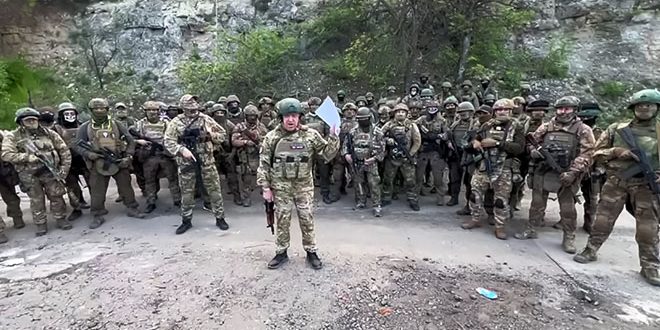

There is now solid proof that not all in Russia support Vladimir Putin’s invasion of Ukraine.
A group of soldiers – called by state media as Wagner mercenaries – had vowed to take control of Moscow “in a march of justice” to denounce the conduct of the 16-month-long war in Ukraine.
Yevgeny Prigozhin, leader of the Wagner mercenaries, said they want to oust the army’s top brass and “restore justice”.
Meanwhile, Putin promised to crush the mutiny.
The world eagerly watches. North Korea expressed their support to Putin. Ukraine’s war-weary residents rejoice at the split in the Russian military that could signal the beginning of the end.
Analysts even claim the balance in the Russia-North Korea-China alliance just might tilt if the mutiny gains headway.
The private army of Prigozhin had seized control of a southern city as part of an attempt to oust the military leadership.
It is Russia’s first armed insurrection since the Chechen wars 20 years ago.
Heavily armed fighters have taken control of the streets of Rostov-on-Don, a city of more than million residents close to the border with Ukraine.
Prigozhin had captured the headquarters of Russia’s Southern Military District after leading his forces into Russia from Ukraine. The city serves as the main rear logistical hub for Russia’s invasion force.
Wagner fighters, in armored vehicles and huge battle tanks, took up positions in the city centre.
They have allegedly also taken control of military facilities in the city of Voronezh, further north on the road towards Moscow.
But latest reports indicated that Prigozhin halted his advance toward Moscow and pulled his fighters back, defusing what had become the biggest threat to Vladimir Putin’s grip on Russia.
As part of a deal to end the uprising, Putin personally guaranteed that Prigozhin would be allowed to leave for neighboring Belarus and authorities would drop criminal mutiny charges against him and his fighters, according to the Kremlin.
The pact was brokered by Belarusian President Alexander Lukashenko, a staunch Putin ally.
The events capped a day of escalating drama that saw Prigozhin take convoys of his fighters to within hours of the capital virtually unchallenged, even after Putin accused the mercenary group of “treason”.
By allowing him to leave unpunished, Putin risks the appearance that he was forced to give in to the armed challenge.
Prigozhin’s rebellion – which Putin in his speech called “a deadly threat to our statehood” – jolted a nation trying to sustain a war in Ukraine that’s the biggest conflict in Europe since World War II.
US intelligence officials believe that Yevgeny Prigozhin, chief of the private Wagner military group, had been planning a major challenge to Russia’s military leadership for quite some time.
US and Western intelligence officials saw signs that Prigozhin was making preparations for such a move, including by massing weapons and ammunition.
The drama continues.