 The Market Monitor Minding the Nation's Business
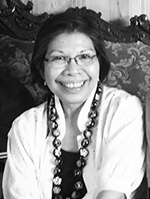
Alegria A.Imperial / Peregrine Notes
My passport,” I blurted out from a subconscious depth during a workshop on Disaster Preparedness two months ago. The workshop facilitator and five of my neighbors from our Strata (condominium) responded mildly stunned. Fortunately, we faced only a virtual scenario of a disaster. Otherwise, I would have none but my passport to chew on for survival. Of course, no one could have guessed how “passport” leaped to my consciousness as an item I consider equal to my life; no one could have imagined what I once survived getting my Philippine passports, and later, my visas. True, all that has long been past, and holding a Canadian passport should have erased the tangled lines in a disaster scramble, which the workshop conjured. But who has known of anybody prepared for one?
The earliest I recall of impending fire that lapped away a Virginia tobacco-curing “pugon,” my grandmother seated on a box looked like the only one we could have saved if the flames reached our house then from across the street. A flood that broke a dam and eroded one of two cemeteries in Bacarra, also in my youth during the early 1960s, sent my grandmother, wading through thigh-high water to borrow a few gantas of rice from relatives; we subsisted on munggo and leftover pork adobo for a few days. In my university years, when fire broke out a block away from the dorm on Espana where I stayed, with cinders raining into our courtyard, we, mere girls in our sleepwear herded into the visitor’s parlor farthest from the fire’s location, carried nothing. Oh, a few cuddled their teddy bears, most of us our assignment notebooks, and those caught in the bathrooms, came out with wet toiletries.
As we, Filipinos, know so well, storms and inundations, as well as conflagrations from paper-like houses have caused chaos repeatedly because of their suddenness or from people’s resistance to warnings. Yet, apparently even from the historic unimagined gigantic sea-surge in Tacloban, none of the loud voices to mitigate the stark destruction in its wake seem to have been heeded. Indeed, as healing begins in small doses, and as the rips and gaping holes in the spirit slowly heal, the norm of being desensitized reverts as demonstrated by the government,. That evening of the “preparedness” workshop, my impulsive answer to the first question undeniably identified me as a Filipino.
Hence, making up for my out-of-tune response, I followed it up with, “my travel kit.” The facilitator turned to me, face brighter as my neighbors perked up with approval, and why not? When we travel, don’t we pack our life in miniature, first, of toiletries like in vials and tubs, sandwich-size plastic bags, and a pencil zip-up container? In it, too, would be a first-aid kit, medicines and vitamin pills, pouches of antacid and painkillers, especially if prescribed, each in its own flip-top box.
The facilitator egged me on to share more when I revealed that along with my travel kit, I also stuff in ready-to-eat snacks, even sardines with pull-up tabs, as well as cereal bars into my backpack, (or what could be my Grab-and-Go bag) especially now that airlines no longer serve meals in local flights, and not to forget, water—not just one liter but a gallon per person. I added on the list, night clothing, undies, feminine pads and wipes, no-rinse soap, and extra shirt, from an experience from a long layover, where we ended up in a hotel, years ago.
Does it sound more fun than serious? It turns out that still, some items missing in my backpack could mean my survival or not before emergency crews could get to victims. As we checked off essentials like a flashlight, radio, whistle, extra batteries and matches in water resistant bags, my neighbors and I paused as if for a one-minute prayer. What else could be missing? The list also includes, garbage bags and plastic ties for personal sanitation, dust mask or cotton t-shirt, to help filter the air, plastic sheeting and duct tape to shelter-in-place, wrench or pliers to turn off utilities, and can opener for food (if kit contains canned food), suggesting shelter situations.
Still, that’s not all. Do I have a relative whose phone I had given a friend in another city? Have I identified this friend? Have we surveyed our neighborhood for possible evacuation? What about documents on insurance and mortgage? Only cash should be in wallets because with possible power outage, all electronic transactions would be shut
Apparently, the rationale to such nationwide workshops prepares individuals while the state takes care of life-saving measures on a wider scale. As its name indicates, a Grab-and-Go bag would have been prepared long before disaster strikes, when time crunches life into danger signals. Here in Vancouver, an earthquake has been identified as a possible disaster. Floods have happened in other provinces during autumn rains and the thaw in the spring. Snowstorms often paralyze the Maritimes and the rest of Northeastern Canada. But with the mild winter we’ve been experiencing, that evening of the workshop merely skimmed through our fears. Yet, the lessons hover in my mind. Indeed, preparedness shouldn’t be the government’s sole responsibility but who must then prepare us?