 The Market Monitor Minding the Nation's Business
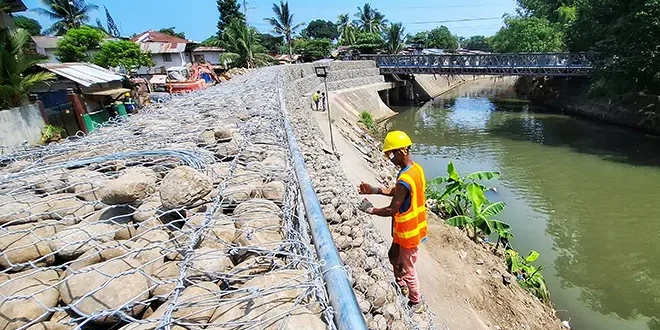
Flood control graft cases are moving swiftly at the Sandiganbayan, with some reaching the defense stage in less than a year, senators said as they pushed for faster justice and stronger support for the anti-graft court.
Sandiganbayan Presiding Justice Geraldine Faith Econg told senators that the first batch of cases filed by the Office of the Ombudsman on Nov. 18, 2025 has already progressed to the defense presentation.
“The first of the flood control cases that was filed by the Honorable Ombudsman was in November 18, 2025. Of the first cases that were filed, they are already in the defense stage,” Econg said during the Senate hearing on the Judiciary’s proposed 2027 budget.
“That means that in less than a year, we are already in the defense side. So that’s pretty fast,” she added.
Econg said the Sandiganbayan has received 26 flood control cases involving senators and congressmen. One has been archived because an accused could not be located, while other cases involving multiple accused have already advanced to the defense stage.
Senate President Win Gatchalian said the pace of the proceedings could mean that some of the cases may be resolved soon, although their outcome will still depend on the evidence and the court’s ruling.
Econg said some cases could be decided within the year if the proceedings continue under the rules on speedy trial, whether the result is conviction or acquittal.
Sen. Joseph Victor “JV” Ejercito said the progress of the cases is important to efforts to restore public confidence in government following the flood control controversy.
“People are waiting for actions. And I think in our quest for accountability, we are instituting reforms so that we would like to practice transparency because we want to bring back the trust of people in government,” Ejercito said.
He stressed that corruption cases must not only be filed but also resolved promptly to ensure that those proven guilty are held accountable.
“The certainty of punishment at the speedy disposition of justice is very crucial in our fight against corruption and for our quest to reform the government,” Ejercito said.
For Econg, expediting trials also helps protect the integrity of the evidence. Witnesses are more likely to remain available and retain clearer memories of events when cases are resolved without prolonged delays.
She warned that witnesses could die, become unavailable or be subjected to outside pressures while proceedings drag on.
“That’s why the Sandiganbayan is actually pushing for speedy disposition of cases, especially the cases that are recently filed,” Econg said.
The anti-graft court has also reported a sharp decline in its pending caseload, which fell to 525 from 1,229 in 2024. Its conviction rate has likewise risen to 82.48 percent this year.
“In 2021, one out of 10 gets convicted. But then now it has changed. We now have eight convicted out of 10,” Econg said.
The court is also reorganizing its staffing pattern to strengthen its capacity to handle new cases and dispose of them more quickly.
Gatchalian, meanwhile, rejected a Department of Budget and Management recommendation to slash the Sandiganbayan’s proposed funding by ₱551 million.
“I don’t subscribe to the recommendation of the DBM to reduce it by 551 million,” Gatchalian said.
Instead of cutting the budget, he said the anti-graft court should receive greater support to expand its manpower and improve its operations as more corruption cases reach the court.
“In fact, we should support the Sandiganbayan more rather than reduce its budget because they need to capacitate themselves, make themselves more efficient, get more manpower to support the voluminous cases that are being filed in the Sandigan,” he said.
“Dapat pa ngang dagdagan para po masuportahan at makahabol ng mas mabilis ang paglilitis,” Gatchalian added.
Econg said the increase in the court’s capital outlay from ₱300 million to ₱719 million is largely tied to the planned construction of Sandiganbayan Building 2.
She said the additional facility is necessary because the existing building is “no longer safe,” citing technical findings involving deficient columns and concerns over its structural integrity.
The current Sandiganbayan complex is also about 1.2 kilometers from the nearest fault line, she said, creating safety concerns not only for justices and employees but also for lawyers, litigants, witnesses and other court users.
“We might be ready, but we cannot answer for the safety of all the court users,” Econg said.
The existing facility can accommodate only five divisions, forcing divisions to take turns using courtrooms even after two additional divisions were established in 2016.